DDX Munich 2026: Design in the Age of AI | Studio East
AI has changed how designers work. Building has become easier, and thinking has become where the real work lives.
Updated
AI has changed how designers work. Building has become easier, and thinking has become where the real work lives.
For creatives, the rise of mainstream AI didn’t raise theoretical questions. It raised personal ones. If a tool can generate what took you years to learn, what exactly are you for? That anxiety is legitimate, and for many people, it still has not fully gone away.
But this has happened before. Photoshop polarised an entire generation of creatives. It was dismissed as a cheat and a shortcut that devalued real skill. Careers shifted, some roles disappeared, and the industry adapted. AI is earlier in that same arc. The adjustment period is uncomfortable and uneven, but creatives have always found their value not by competing with new tools, but by doing what those tools cannot.
But what AI can’t do is think with intention.
Less time on the build shouldn’t mean doing less work. What it really means is that the work has shifted toward the human elements: research, judgement, creative thinking, and ethical awareness.
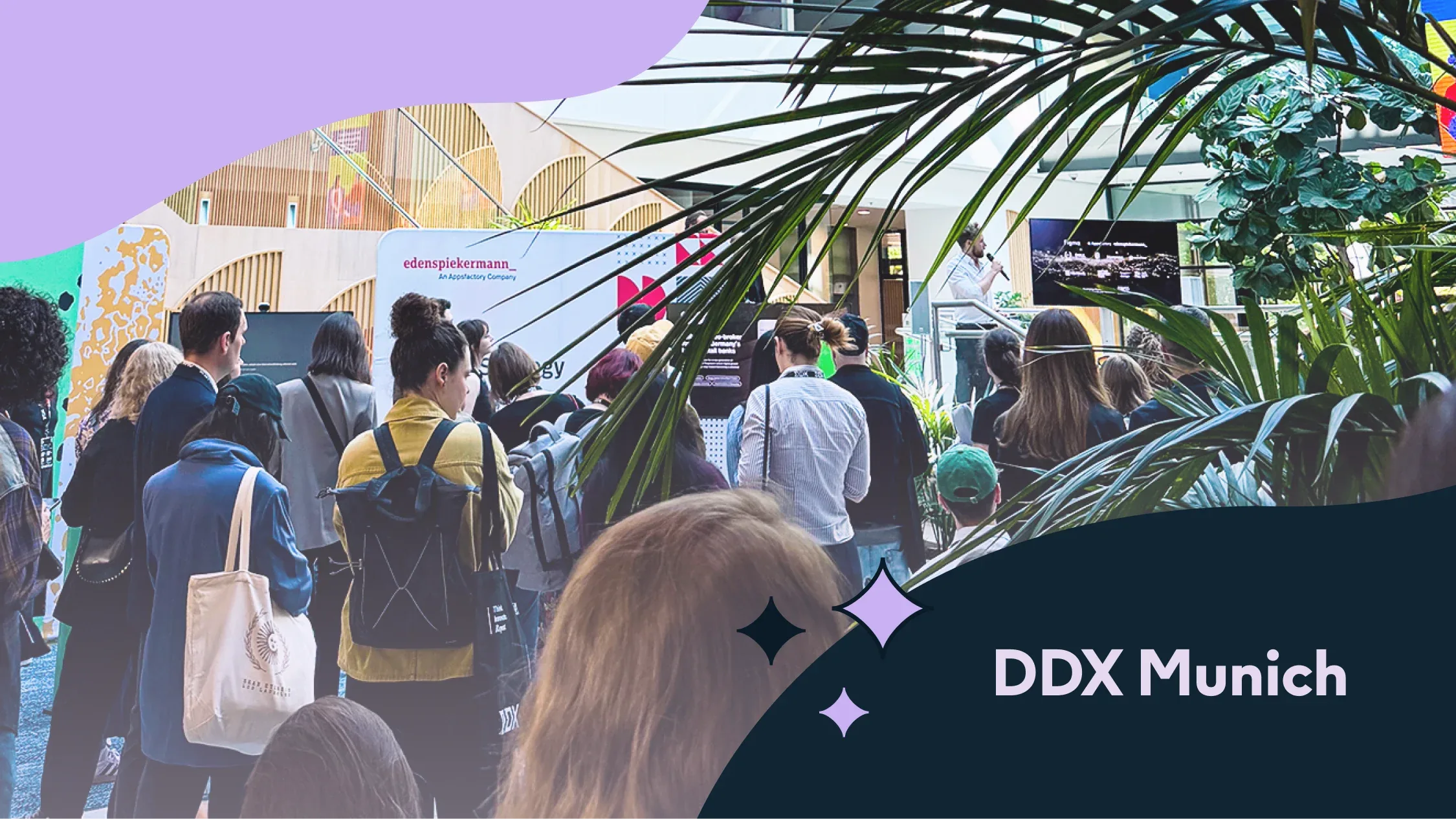
I recently had the opportunity to attend DDX Munich 2026, where AI was at the centre of just about every conversation. What stood out was not how much people were talking about AI, but how differently they were talking about design in the face of it.
Across the sessions, one question kept resurfacing: what does design mean when AI handles the execution?
The Part of Design AI Cannot Do
Before AI, getting a product in front of a user usually meant wireframes, development time and a project timeline that could stretch across a week or more. AI-powered design tools like Figma Make have compressed that process dramatically. A designer can now describe an interface in plain language and generate a working, interactive prototype in minutes.
But speed doesn’t replace thinking.
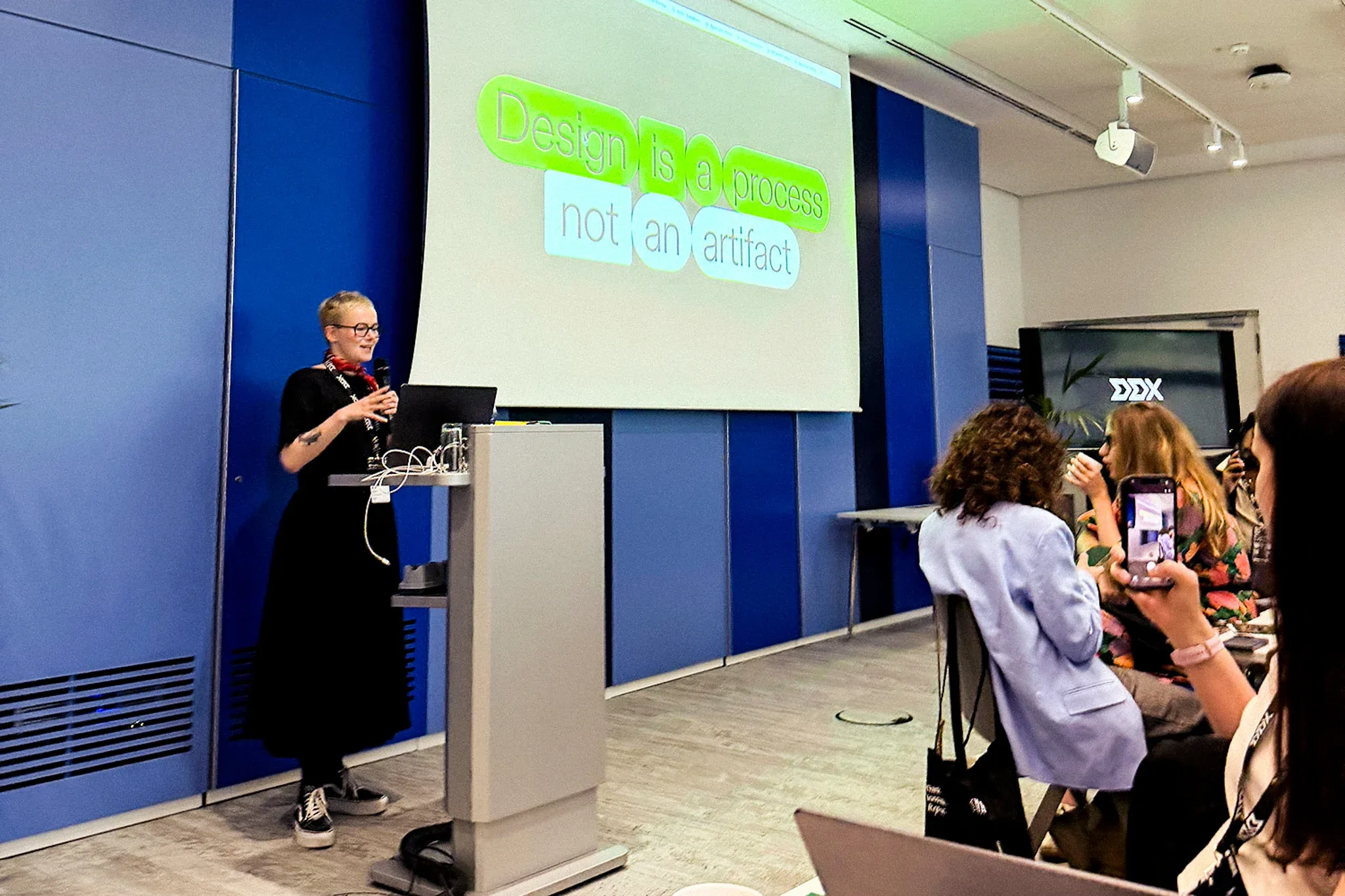
In Laura Fehre’s workshop at DDX Munich 2026, the point was made plainly: the work doesn’t start at the prompt. It starts with the audience, the problem and the questions worth asking. Without that groundwork, AI-generated output is just volume. As Laura put it, 100 multiplied by zero is still zero.
This is where a designer’s judgement becomes irreplaceable. AI has access to vast amounts of information, but it tends toward the average: the most common pattern, the statistically reasonable answer. Designers draw on something different. Years of research, observation and experience help them recognise what users actually need.
Designing for People and Machines
Designers have always designed for people. What is changing is how much we can know about them.
Sebastian Löwe, Director of UX at Virtual Identity, explored this at DDX Munich 2026 through the idea of the empathetic web. AI can interpret behavioural signals in real time, including scroll speed, interaction patterns and text sentiment, to infer a user’s emotional state while they are using a product.
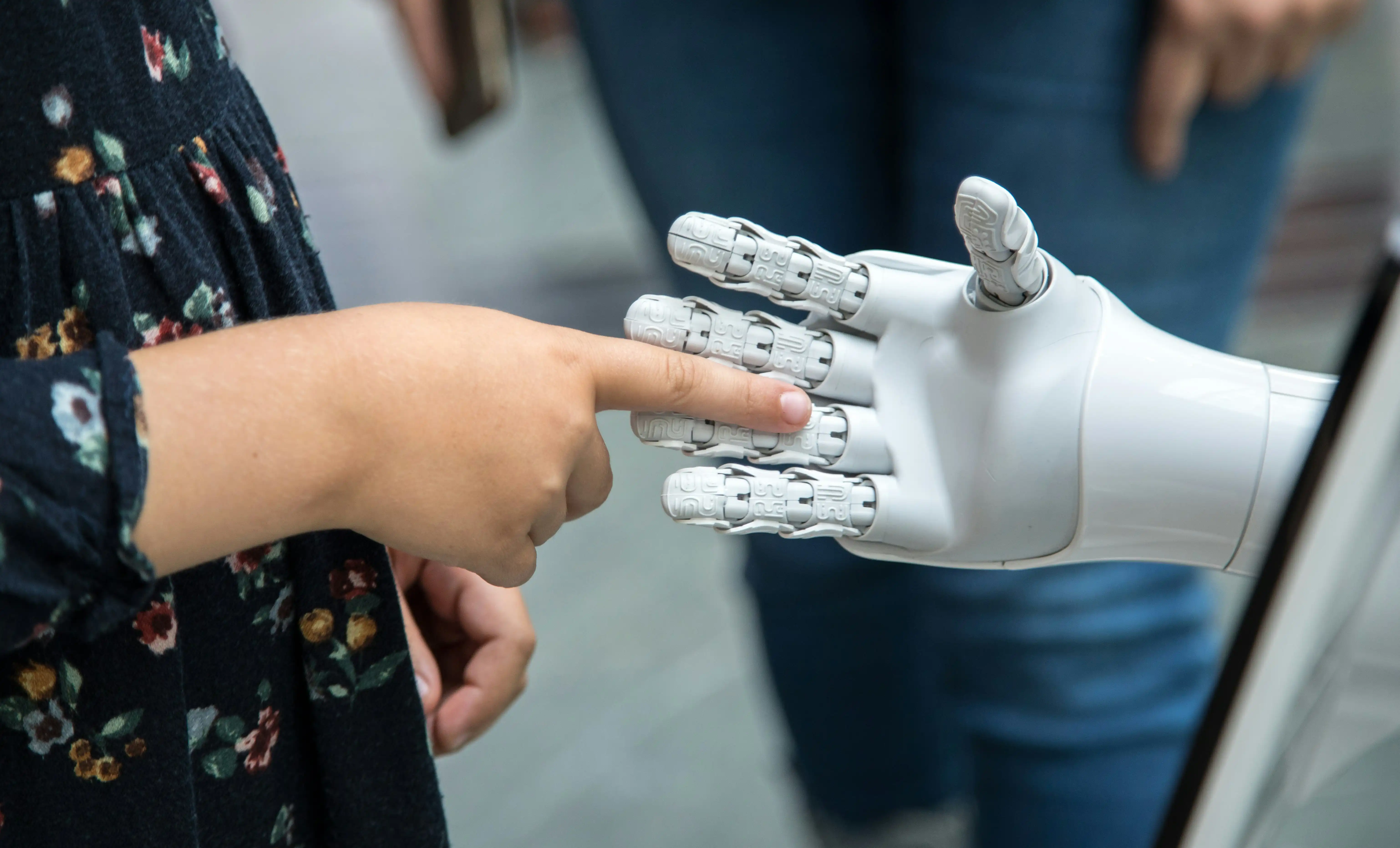
But AI is just as much a tool for users as for designers. Browser-based agents are beginning to research, purchase and make decisions on a user’s behalf. This raises an important question: if an agent is navigating a product for someone else, whose behaviour is actually being read?
This creates a new design reality: the audience is both human and machine. Designing for one without considering the other means designing with only half the picture. What makes this workable is that the data AI surfaces serve both sides equally. A clearer understanding of how humans behave, what causes stress and what drives engagement is also the foundation for designing experiences that agents can navigate effectively. Human insight and machine logic are not separate problems. They inform each other.
Whether the audience is a person, an agent or a system adapting to behaviour, the underlying decisions remain the same: when to simplify, when to enrich and when to step back. Those choices still require human judgement.

When Agents Need to Earn Trust
AI agents operate faster than humans can review. The faster they move, the less opportunity anyone has to intervene.
For designers, that speed creates a specific risk. Relying on AI to generate solutions before a problem is properly understood produces faster output and shallower work. The pace of the tool begins to set the pace of the thinking, and the result is work that is generic, unchallenged and difficult to defend.
The same dynamic plays out for users. Verification requires attention, and attention takes time. When agents act at a pace that outstrips both, checking becomes the exception rather than the rule. Users approve decisions they have not read and delegate tasks they have not fully considered. Trust becomes automatic.
That compounds a problem AI already has. Models hallucinate, miss context and produce outputs that are confidently wrong. Left unchecked, this becomes a behavioural problem as much as a technical one.
Tashfeen Ahmed, Senior Product Designer at Microsoft, put it plainly at DDX Munich 2026: agents need to earn the right to act. That changes the designer's role. Rather than letting agents move silently in the background, designers need to build in moments that keep users informed and in control. A pause before a high-stakes action. A summary of what is about to happen before it does. A simple way to undo it if it goes wrong. These are not obstacles. They are how trust gets built.

From Human-Centred to Humanity-Centred Design
Design has always been human-centred, focused on making products easier, safer and more useful for the people who use them. But the bigger technology gets, the more that focus on the individual user obscures who else is affected.
Self-checkout machines were designed for convenience, but they also displaced workers. Hostile architecture optimises the experience for some by deliberately degrading it for others. AI systems consume enormous amounts of energy, yet their environmental cost is rarely part of the design conversation.
At DDX Munich, Don Norman argued that human-centred design needs an upgrade. As AI drives conversations about job displacement, misinformation and environmental impact, the consequences of what designers build have become more visible and more consequential.
Humanity-centred design is the response. It asks designers to consider not just the person using the product, but everyone the product touches. That means stepping outside silos, questioning briefs, pushing back on decisions that optimise for profit at the expense of people, and holding the same standard for the tools they use as for the products they create.
Designers have always shaped the world people live in. The question now is whether they are doing it with that responsibility in mind.

Where This Leaves Designers
For me, DDX Munich 2026 was not really a conference about AI. It was about what design becomes when AI is everywhere.
Our jobs as designers are not simply under threat. They are changing. AI has pushed that change forward by taking on more of the execution. That can feel unsettling, especially when so much of our skill has been built through craft and practice. But listening to these talks, I realised AI is not something we need to fear. It is something we need to understand, question and use with intention.
Our time was once consumed by execution. Now, more of it can be spent on the work that was always more important: judgement, creativity, ethical responsibility and deep human understanding. These are not new values. They were always central to good design. What is new is the space to prioritise them.
As AI takes on more of the doing, our role has shifted toward the questions that matter most: why something gets made, who it serves, what it costs and what it leaves behind. The tools have changed. The responsibility has not. If anything, it has grown.