Web Design & SEO: Why You Can’t Win Without Both
Web design can be an exciting investment. A refreshed brand, cleaner layouts, improved colour palettes and subtle animations can all make a website look and feel sharper.
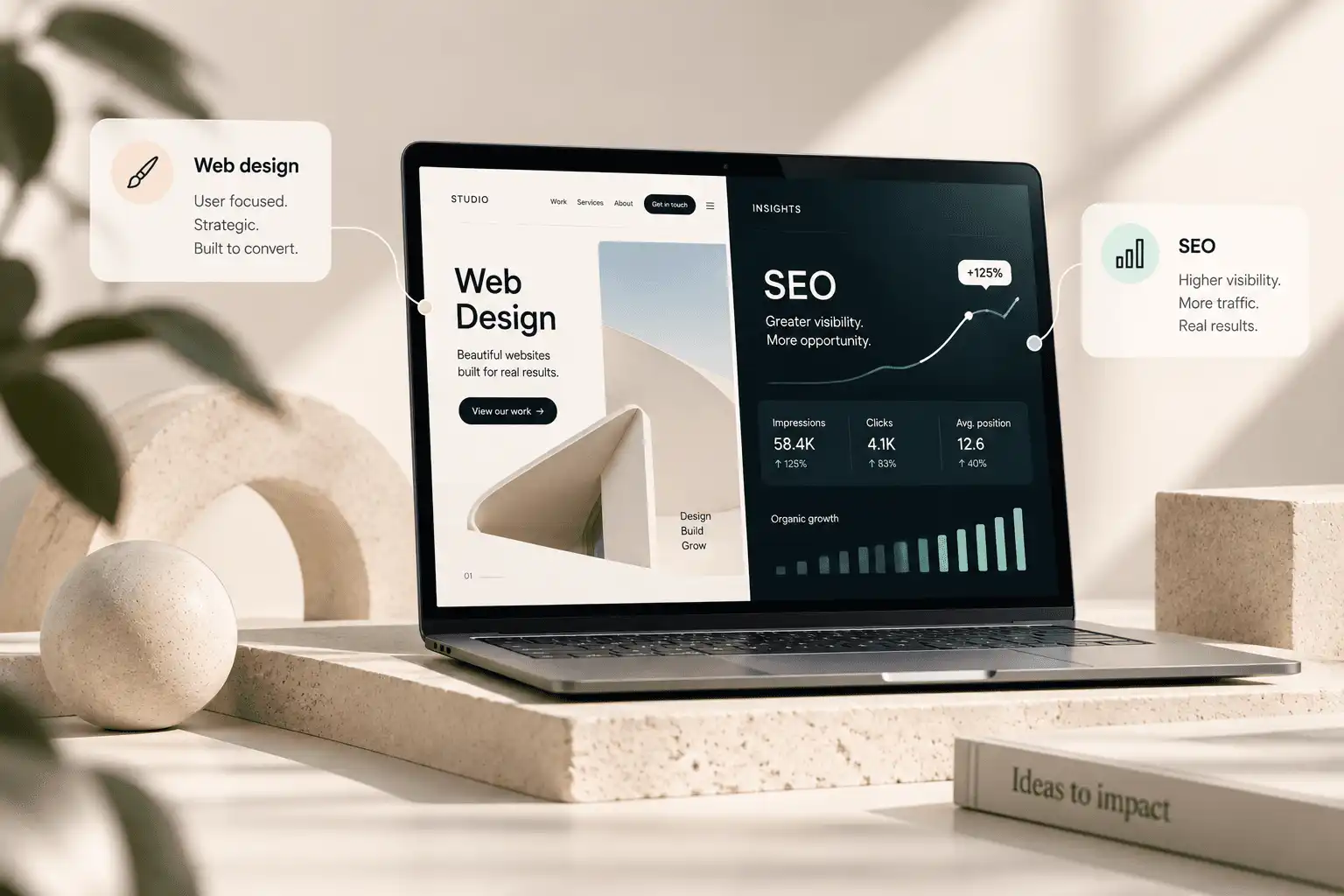
But when design decisions focus on appearance alone, that investment can lose impact quickly. A site can look polished and still struggle to attract the right audience or convert interest into action. If people can’t find your website or use it easily once they arrive, strong visuals won’t deliver meaningful results.
This is where web design and SEO intersect. One shapes how your site looks and functions. The other helps determine whether it can be discovered through search. But even the basics of SEO can be tricky to get right and when SEO is treated separately from design, performance can suffer in ways that go beyond traffic.
How Web Design and SEO Work Together
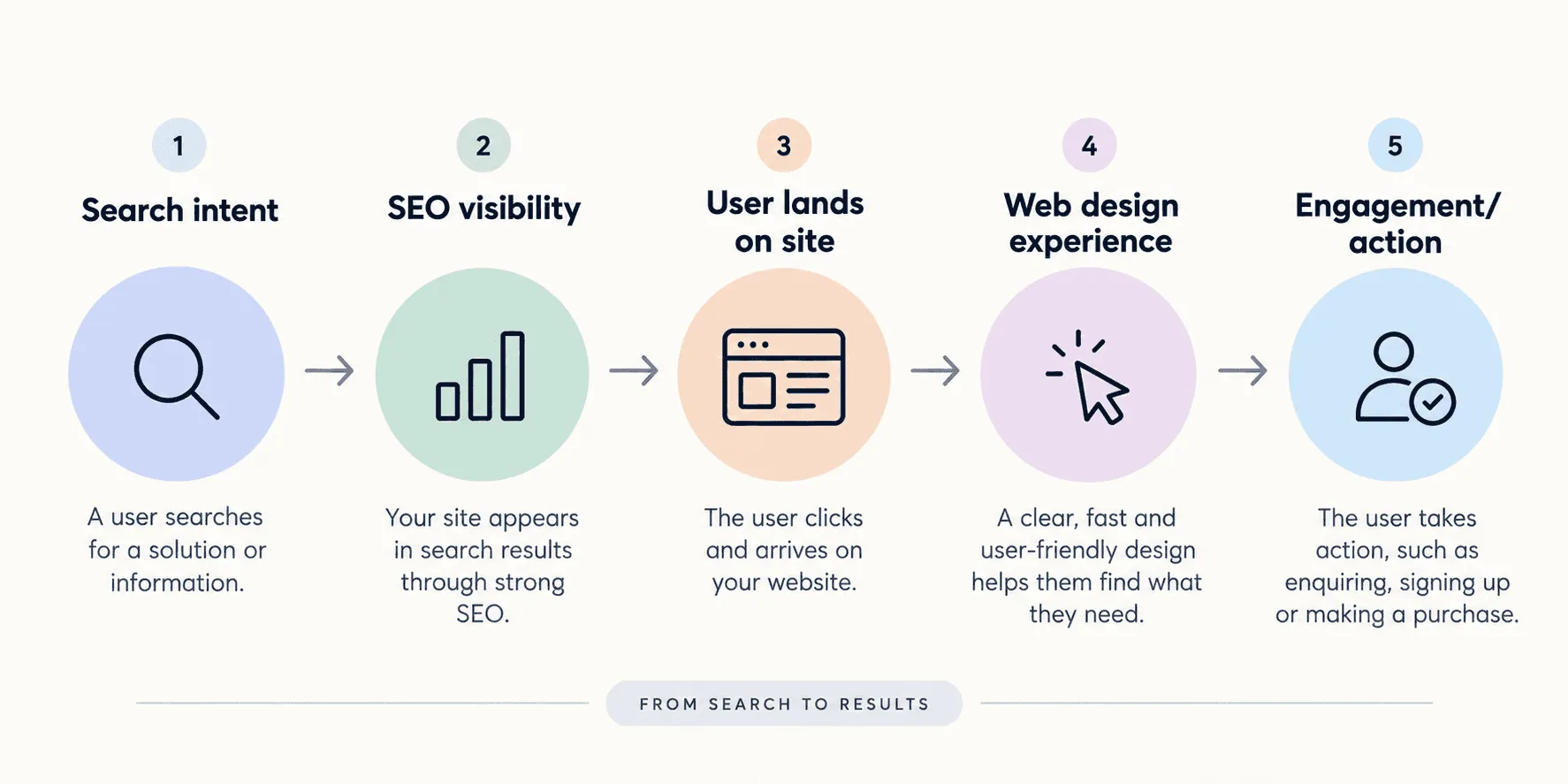
SEO helps people find your website when they’re actively searching, while web design shapes how they experience it once they arrive. Together, they help make your site discoverable, accessible and easy to use, building trust and encouraging users to take action.
When web design and SEO are aligned early on, that integration shows up in practical decisions such as:
Research shapes site structure, using search insight to understand what users are looking for and which content matters most
Pages are organised for clarity, with clear labels and groupings that make navigation easier for users and search engines
Layouts reflect priority, so important information appears first and supporting detail sits where people expect it
SEO insight guides page focus, reducing overlap and ensuring each page has a clear purpose
Strong web design brings that structure to life by translating intent and hierarchy into a usable experience. When the experience breaks down, users can leave before the content has a chance to do its job. According to Hostinger, poor design can drive 38% of users away.
SEO helps the right audience discover your site in the first place. But visibility without usability can struggle to convert, while great design without search visibility can struggle to attract an audience.
That's why our approach to web design and development considers UX, website structure and performance as connected parts of the same digital experience.
How Web Design Can Affect SEO
Search engines like Google aim to surface useful, relevant results. Matching a search query matters, but the technical quality and usability of the page also play a role in how well a website can perform in search.
In the past, some sites relied on tactics like keyword stuffing to gain visibility, often at the expense of the person actually reading the page. Today, SEO is much more closely tied to creating useful content within a technically sound website.
Web design can influence several factors that matter for SEO. Page speed, mobile usability, site architecture, internal linking and how content is structured can all affect how easily search engines crawl and understand a website and how easily people use it.
This is why a strong SEO strategy needs to consider the website itself, not just keywords and content.
Search is continuing to change too. With the rise of generative search results, clear structure, useful information and easily understood content are becoming increasingly important for visibility across traditional and AI-driven search experiences.
Web Design Mistakes That Can Hurt SEO
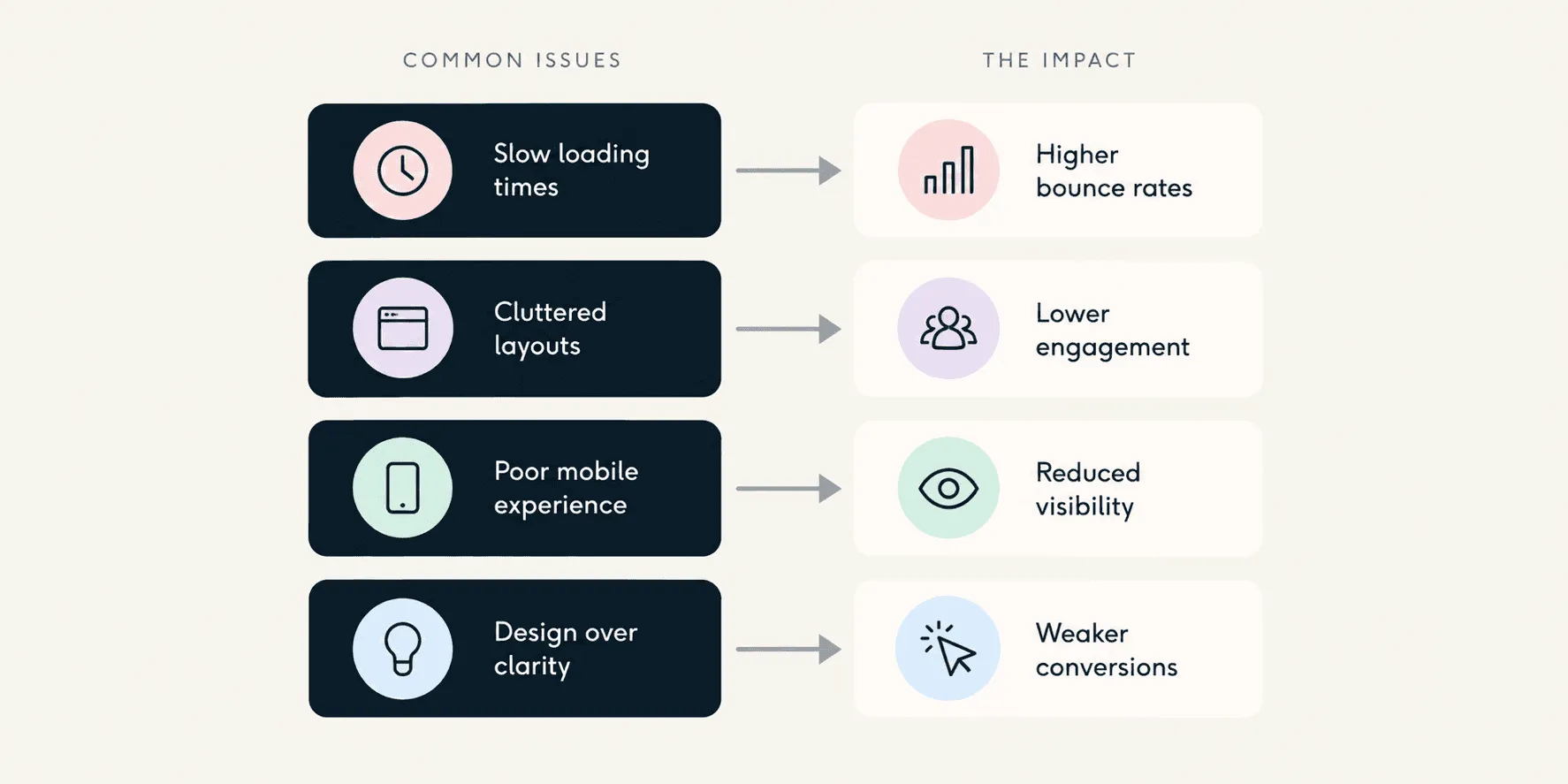
Many SEO problems don’t come from the content itself, but from how a website is designed and built. Even well-written pages can struggle to perform when technical or usability issues get in the way.
Common problems include:
Slow-loading pages that frustrate users and make the website harder to use
Cluttered layouts that make it difficult for visitors to understand what a page is about or where to go next
Confusing navigation that makes important pages harder for users and search engines to find
Poor mobile experiences that make browsing, reading or taking action difficult on smaller screens
Design-led decisions that prioritise aesthetics over clarity, resulting in pages that look polished but don’t effectively guide users
Important content hidden behind interactions or unclear structures, making information more difficult to discover
Accessibility also needs to be considered as part of a usable website. Clear navigation, readable content, meaningful alt text and accessible interactions help create an experience that works for more people. We've explored why web accessibility matters and the role it plays in better digital experiences.
When these issues stack up, the website becomes harder to navigate, understand and use. That can limit both organic search performance and the site's ability to turn traffic into meaningful action.
Designing SEO-Friendly Websites That Perform
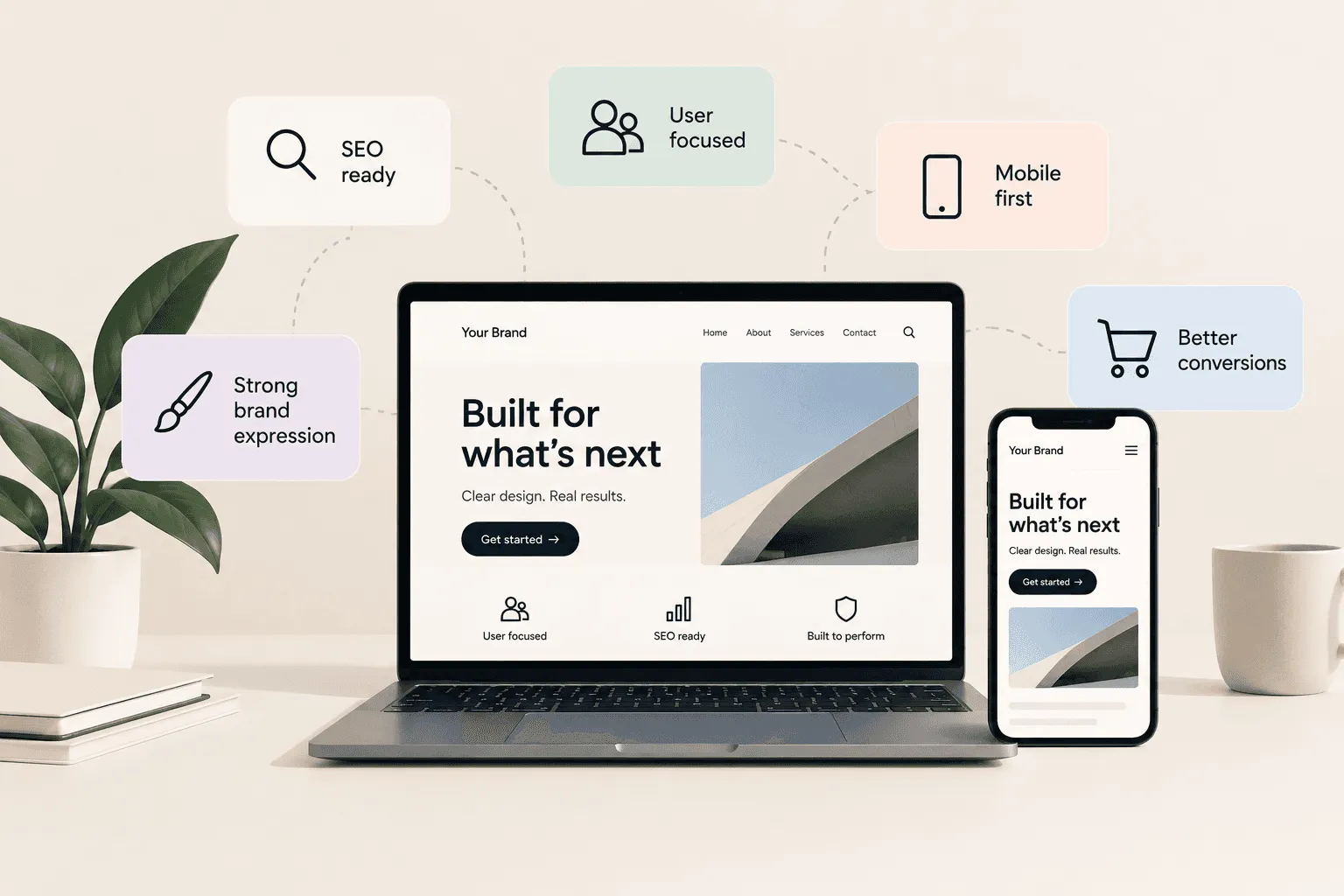
Designing websites starts with intent. Strong visuals still matter, but effective web design focuses on guiding users smoothly from arrival to action without unnecessary friction.
A clear structure, hierarchy and readable content help users understand what you offer and find what they need more easily. In web design, usability should lead the experience, with aesthetics supporting it.
That focus on usability naturally raises the question of balance. Brand expression and clarity need to work together. Prioritising visuals over structure or search intent can make a site look distinctive while limiting its performance.
Adding SEO after launch is rarely as straightforward as considering it from the beginning. Revisiting site structure, content hierarchy, URLs or navigation later can add unnecessary work and force compromises, which is why early alignment helps protect both performance and brand.
Design also needs to reflect how people use websites today. According to Statista, 62.54% of global website traffic comes from mobile devices, making mobile-first thinking essential.
With so many users browsing on smaller screens, logical navigation, readable content and fast-loading pages are no longer optional. They're expected.
This matters even more in ecommerce web design, where design decisions directly affect how easily users move from browsing to buying.
When web design is built with SEO in mind, it supports both users and organic visibility. The result is a website that doesn't just look good, but works harder to deliver meaningful outcomes.
The Takeaway: Performance Beats Polish
Web design and SEO work best when they’re treated as part of the same system.
A site that looks good but can’t be found will struggle to deliver value, just as strong visibility without a usable experience can limit conversions. That’s why web design and SEO need to be considered together from the start, not handled as separate projects.
When design decisions are guided by user behaviour, search intent and clarity, websites become more than a visual asset. They can support growth by attracting the right audiences and making it easier for them to take action.
And once people arrive, the wider marketing and performance strategy can connect SEO with CRO, analytics, paid media and other channels to understand what's driving results.
At Studio East, we design and build websites with performance in mind, aligning web design, UX and SEO to support real business growth. If you want your website to work harder, talk to us today.
Frequently Asked Questions
Does web design affect SEO?
Should SEO be considered during web design?
What makes a website SEO-friendly?
Can a website redesign hurt SEO?
Is mobile-friendly web design important for SEO?
Is SEO just about keywords?