Proof of Human: Do We Need to Know When AI Made Something?
AI is getting better at being human. Now we may need better ways to prove when something actually is.
Scroll Down ↓
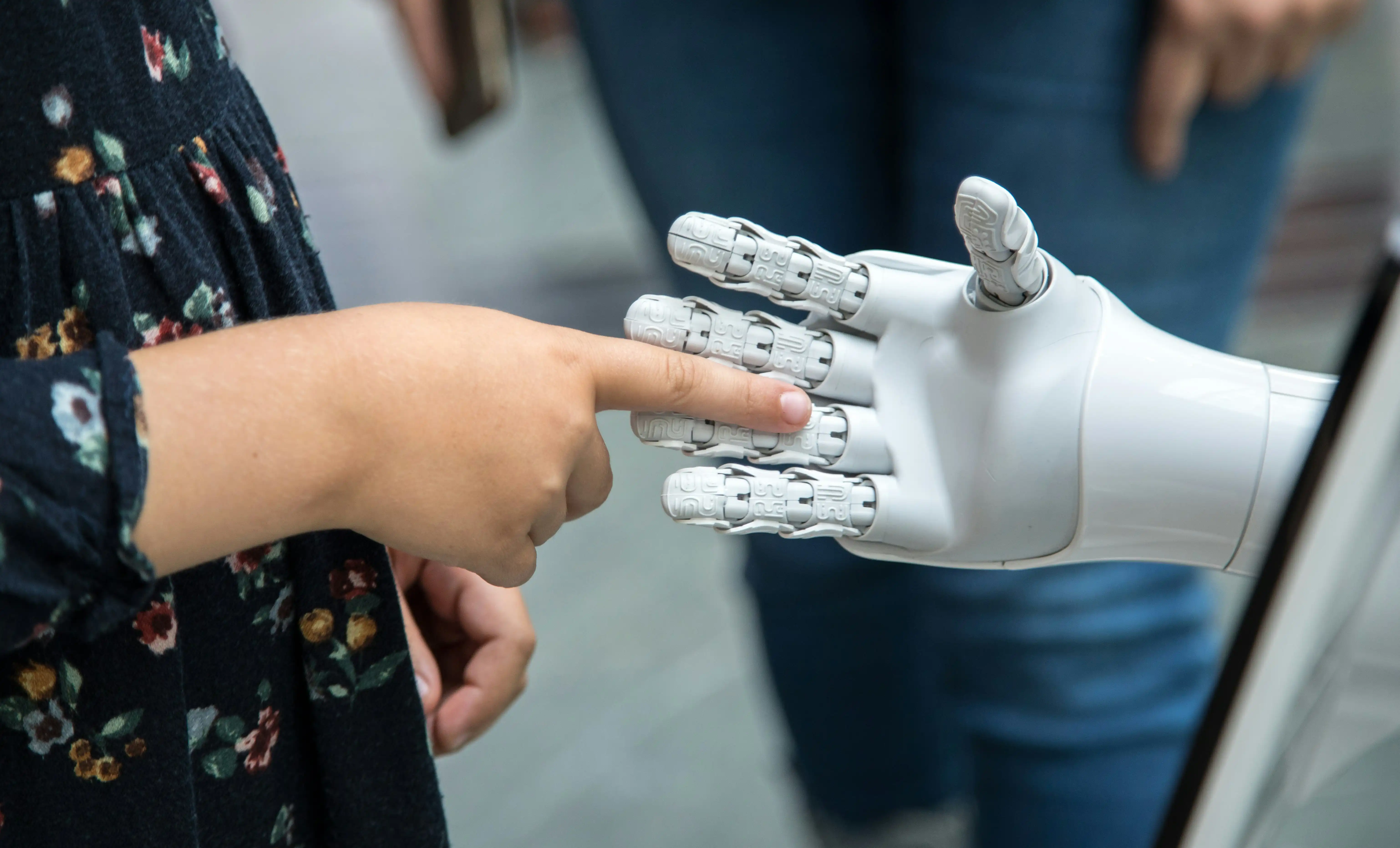
Spotting AI used to feel easy. Six fingers in an image. A suspiciously polished paragraph, a flat, robotic voice. An abundance of em dashes and the infamous “it’s not X, it’s Y” sentence structure.
But the tells are getting harder to spot.
AI can now write, speak, design and generate video with increasing realism. And as technology improves, the line between what is created by a person and by a machine is becoming difficult to distinguish. And this raises a bigger question. If we can’t tell when AI made something, should we be told?
Anthropic’s decision to add an invisible watermark to Claude attempts to answer this question. But it has also become the catalyst for a much bigger conversation around trust, transparency, creativity and the value we place on human involvement.
Claude's Watermark Has Started a Bigger Conversation
Claude recently announced it will be adding an invisible “watermark” to its text. It works by subtly influencing the probability of which words Claude chooses as it generates a response, creating a detectable pattern within the text itself.
The move comes ahead of new transparency requirements under Article 50 of the EU AI Act, which aim to make AI-generated content more identifiable and reduce the risk of deception and manipulation.
AI has been at the centre of spreading disinformation, hate speech and polarising content, such as the AI-generated robocall that mimicked the voice of the then-President of the USA, Joe Biden, in January 2024, telling New Hampshire voters to skip the primary. This clip was estimated to target as many as 25,000 households before it was identified as fake.
AI literacy is a must in today’s world to decipher whether content is real or fake. But as AI continues to develop at such a fast pace, many people are finding it harder to keep up.
With misinformation continuing to spread, there is a clear argument for making AI-generated content easier to identify. Watermarking could give people another way to distinguish synthetic content from genuine material, helping to limit the potential for AI-generated content to be used deceptively.
Yet Claude’s watermark announcement had a polarising effect, with many people unhappy and worried that their work would be marked as AI-generated content. How it works and whether it will impact all work, including coding, remain relevantly vague at this time.
If Everyone's Using AI, Why Don't We Want Anyone to Know?
People and businesses have freely adopted AI, with around 77% of companies pushing AI on workers. And while AI adoption continues to grow, transparency in its use has not yet kept up.
Before the EU AI Act, there was no single law requiring disclosure of AI use. Existing consumer protections could still apply to AI, such as the FTC warning that using AI to deceive consumers constituted as deception under Section 5, but businesses still had considerable freedom to decide when, where and how they disclosed their involvement.
And that involvement is growing. AI-generated actors promote products; AI can write the copy, create the imagery and produce the video behind a campaign. More companies openly talk about becoming “AI-first”, while others are careful to reassure customers that their work remains “human-led”, but to what extent?
Duolingo experienced this tension after announcing its shift towards becoming an “AI-first” company and reducing its reliance on work contracts that AI could perform. But this announcement prompted public backlash, with users threatening to cancel subscriptions.
So, does this example act as a warning to people and companies? That admitting AI usage could risk losing users? The answer may lie in the gap between AI adoption and AI trust. While the use of AI has become increasingly common, only 46% of people globally say they’re willing to trust AI systems, according to KPMG.
But there may also be a question of value. We're happy to use AI ourselves to speed up a process, generate ideas or make a task easier. But when we’re paying a company for its expertise or service, discovering that AI is doing some of that work can feel different. If the same AI tools are available to us, what exactly are we paying for? We may be comfortable using AI ourselves, but not necessarily comfortable paying someone else to use it on our behalf.
So, What Actually Counts as AI-Generated?
One of the main issues around Claude’s watermark is: what counts as AI-generated content?
Creating content from scratch using AI models is a hard yes. But what about proofreading? What about translating work, summarising research or suggesting a different way to phrase a sentence. All of these involve AI, but could original work still end up carrying Claude’s mark?
Anthropic acknowledges that detecting its watermark doesn’t prove Claude wrote it, only that Claude “may have processed” the content. But this distinction is essential when a client, employer or lecturer could interpret the consequences of an AI marker as evidence that AI created the work.
The problem becomes even more complicated when we look at AI detection itself. MIT tells lecturers that AI detectors don’t work reliably enough to serve as definitive evidence, warning that high error rates can lead instructors to accuse students of misconduct falsely. Instead, it recommends looking at the work itself and using human judgement when concerns arise.
There’s irony there. We’ve built AI-powered tools to tell humans whether AI wrote something, while research suggests that humans recognise AI texts slightly better than AI detectors.
As AI becomes embedded in the tools we use every day, the line between human-created and AI-generated work will only become harder to draw. If we’re going to demand greater transparency around AI, identifying whether it was involved isn’t enough. We need to understand how it was involved.
What Do We Lose When AI Gives Us the Perfect Answer?
AI has brought speed and efficiency to the way we work and search, with small businesses increasingly using AI to help them do more with fewer resources. People are no longer performing multiple searches to find an answer; more than one-third now use AI to help with search, providing conversational, immediate answers rather than relying on a traditional search bar.
But we aren’t just using it to find answers. We’re asking it to explain problems, rewrite sentences and turn half-formed ideas into something polished. In China, one national survey found that 21% of primary and secondary students said they would rather rely on AI than think independently.
AI promises us a world without mistakes
As we become more accustomed to getting answers immediately, it’s important to remember why friction matters. Errors have rarely been seen as positive, in both professional and personal settings. Yet research shows that making and then correcting errors during training can benefit learning and reduce the likelihood of making the same mistakes in the future.
Being told what to do and following a rule book doesn’t make you an expert. Understanding what can go wrong, why it went wrong and how to prevent it from happening again does.
This becomes particularly important in education. UNESCO notes that when AI tools are designed to encourage reasoning, they can improve learning outcomes. But when they only provide an answer, students learn less. And if there are no regulations around the use of AI, when we can skip to the answer, we also start skipping the thinking that helps us understand how we got there.
What happens when AI shapes how we grow up?
This question becomes even more important for children who are growing up in an AI-powered world.
Schools were initially quick to restrict it, but AI is becoming increasingly embedded in education. The Economist reports that 61% of pupils and 69% of teachers use AI to help with schoolwork. AI can now act as a tutor, explain complex concepts and provide individualised support that was once hard to provide.
At a school in Flanders, Belgium, around 4,000 students are using AI-powered reading tools from Microsoft. This technology is designed to provide more individualised support based on differences in background, culture and language. Examples like this show the other side of the argument: AI doesn’t have to replace learning. Used well, it could make learning more accessible and personalised.
But personalisation comes with its own questions. Algorithms learn what we like and give us more of it. For a child whose understanding of the world is still developing, an experience constantly shaped around their existing preferences could reduce exposure to unfamiliar ideas and perspectives.
In the world of algorithms, AI seeks to enforce your likes, exposing you only to what appeals to you. When a child who is not yet developed is forced into an echo chamber, it limits their perspective. Then there’s the human imperfection AI can remove.
Chatbots are often designed to be accommodating, removing some of the disagreement and friction that naturally comes with human interaction. For children still developing socially, this raises another question around what could be lost when an increasingly personalised digital world becomes easier to navigate than an imperfect human one.
Researchers at the Oxford Internet Institute (OII) analysed more than 400,000 responses from five AI systems and found that friendlier answers contained more mistakes. And here lies the issue of a perfect world crafted by AI. It can still make mistakes.
And that's why enforcing the idea of perfection through AI doesn't remove mistakes. It risks weakening our own ability to recognise them.
Companies Are Choosing AI. Are Their Customers?
Many businesses have hopped on the AI train. A tool that offers more work with fewer resources.
In Ireland, around 74% of businesses use AI, while globally, some employers have begun explicitly linking job cuts and changes to their workforce to the efficiencies AI can provide. AI was cited in 8% of job-cut plans analysed in 2026, while IBM CEO Arvind Krishna has said the company replaced hundreds of HR roles with AI, according to The Wall Street Journal.
From a business perspective, it’s easy to understand the appeal. If AI can complete repetitive tasks faster, operate around the clock and reduce costs, why choose a human who will cost more and work at a slower pace?
But Claude’s watermark introduces another consideration. If AI use becomes increasingly visible, will businesses be as comfortable replacing human work when their customers see exactly where AI has been used?
Is the AI investment paying off?
For all the investment going into the technology, businesses are still trying to establish where the return will come from. One MIT study found that 95% of corporate AI investments have generated zero return at the time of publication. Economists and investors have begun questioning whether the current levels of AI spending are sustainable, prompting comparisons with previous technology bubbles.
For Ireland, the consequences of any major correction wouldn’t stay in Silicon Valley. With many of the world’s largest US technology companies having a significant presence here, Irish government analysis found that a major US equity correction could weaken domestic investment and employment growth. The report also warned that a disorderly correction linked to the AI boom could have wider economic consequences beyond falling share prices.
This highlights the growing concern around our reliance on AI. Businesses and economies are betting heavily on a technology whose long-term returns are still being established. And with all this investment, one vital component can be left out of the conversation: do customers actually want AI?
But do customers actually want AI?
PR Newswire reports that nearly three in four Gen Z consumers have taken direct action against a brand after encountering AI-generated marketing, such as unfollowing or unsubscribing. With the oldest members of Gen Z now approaching 30, this isn’t a future generation of consumers brands can worry about later. They’re already customers, employees and decision-makers.
Of course, not every use of AI is visible or likely to matter to a customer. Using it to support repetitive back-office processes is very different from replacing the person a customer speaks to, the illustrator behind a campaign or the writer developing a brand’s voice. In those situations, human involvement may be a part of what the customer thought they were paying for in the first place.
Take a marketing agency. If a client discovers that much of the work they’re paying an agency to produce is being generated using the same AI tools they can access, it’s reasonable for them to question what they are actually paying for.
That’s the other side of AI accessibility. Businesses can use AI to reduce costs and speed up production, but their customers have access to many of the same tools. And if AI can produce more for less, businesses need to be clearer about where their value comes from beyond production alone.
If AI Can Make Anything, What Makes It Creative?
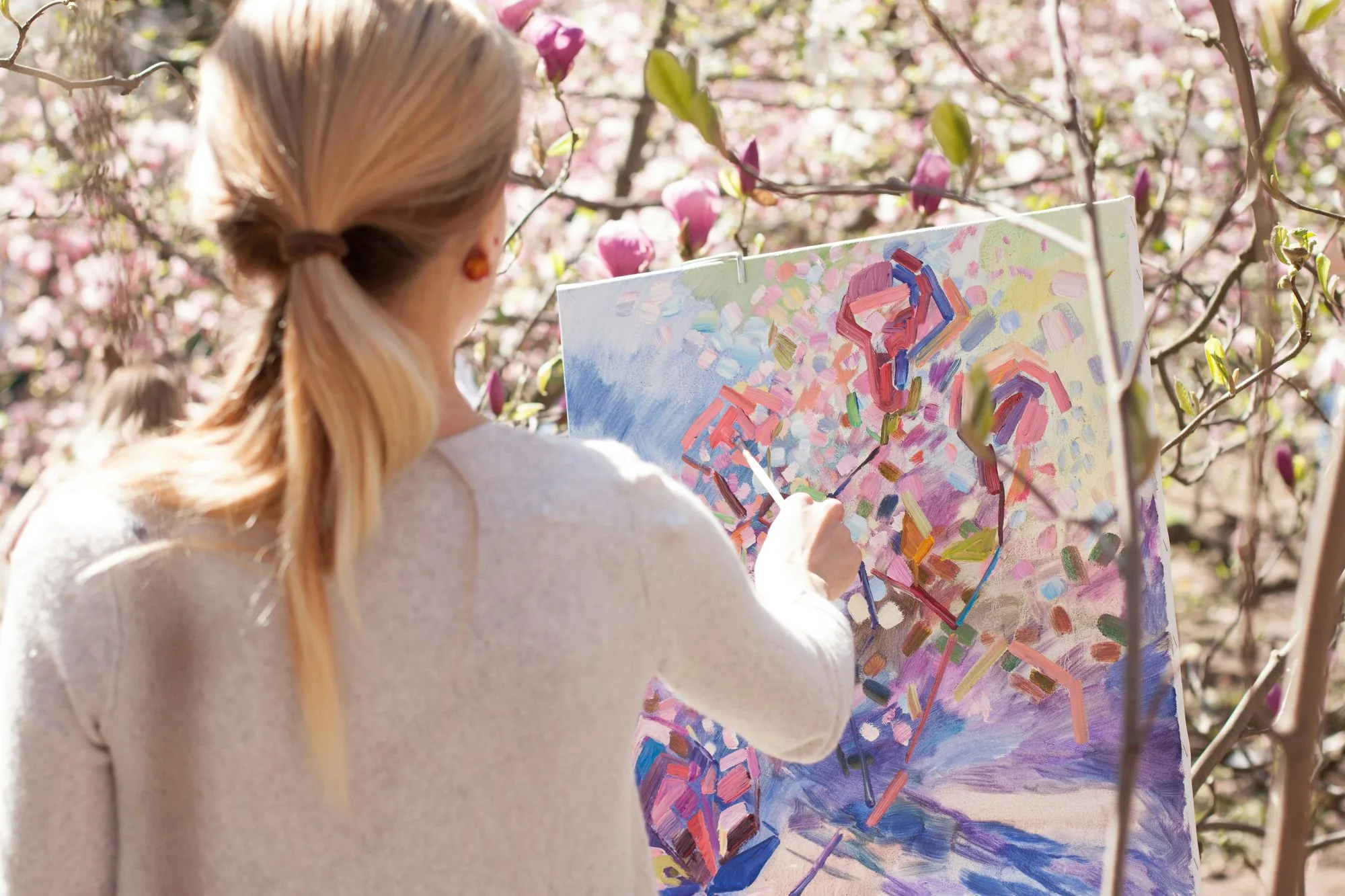
There is no limit to human creativity, but there is a limit on time. In “Outliers”, Malcolm Gladwell popularised the idea that becoming a master of something, from music to chess, takes around 10,000 hours. The theory has since been challenged and widely debated, but the broader point remains: getting good at something takes time.
Just as it has in business, AI can speed up the creative process, generating images, prototypes, copy and video in minutes. But throughout history, artists haven’t only been valued for what they make. The thinking, experimentation and time behind the work matter too. And what AI cannot do is think with intention.
So, what happens when we remove the work of making from the equation? And can something be considered art in the same way when there isn’t an artist behind it? AI can draw from a vast amount of existing material, but it doesn’t have a childhood and can’t experience grief or love. But designers, musicians, writers and painters do and from their own experience they can create.
Marcel Duchamp famously challenged the definition of art with the “Fountain”, forcing the art world to consider whether the artist’s idea and intention could matter more than the physical act of making something. A century later, AI presents us with a strangely similar question: if an image takes less time to generate than it takes to make a cup of coffee, does that change the value we place on it?
Some artists have welcomed that challenge. Artist Matt Saunders has argued that having creatives' habits and assumptions challenged is a good thing. Photoshop faced its own scepticism before becoming another tool in the creative toolkit and AI may follow a similar path. And we are already seeing a rise in artists using AI as a medium of expression, incorporating it into work rather than handing the creative process over to it entirely.
When AI becomes the creator, not the tool
But there’s a difference between a creative choosing to use AI and a company choosing AI instead of a creative. And that’s where transparency starts to matter again. If something is being sold to us as a book, an artwork or a piece of creative expression, should we know whether there was actually a writer or an artist behind it?
We’re already seeing what happens when that distinction disappears online. One of the clearer examples is the rise of AI-generated books promoted across social media. Videos on TikTok use familiar recommendations like “everyone is gatekeeping this book” or “this book changed my life”, creating an impression of genuine readers recommending genuine authors.
One book we investigated and one that repeatedly appeared in the comment sections was Princess of Attraction by Elena Grace. Looking further into it, the website presents an author image that appears AI-generated alongside a claim of 7,192 reviews averaging 4.7 stars, although we couldn't find evidence on the site showing where those reviews came from. It's an example of how difficult it can now be to establish what, or who, sits behind the creative products being promoted online.
And while AI is being used to replace creatives, The Washington Post revealed that Anthropic’s Project Panama involved purchasing millions of physical books, cutting off their spines, scanning them and using the resulting digital copies to help train Claude. Bookshop owners in the UK and Ireland have noticed unusual orders that do not follow typical grouping patterns by theme, such as romance or sport.
Anthropic’s approach raises another concern: it runs the risk of other AI companies following a similar path, increasing demand for physical creative work only for it to be digitised, used for AI development and potentially destroyed in the process.
So two things can be true at once. AI can become a new medium through which people can create, while also enabling businesses to reduce their reliance on creators whose work helped make their systems possible. And perhaps that's where the distinction matters. The question isn't whether AI can create something. We already know it can. It's whether we still care who, if anyone, was behind it.
Welcome to the Age of Proof of Human
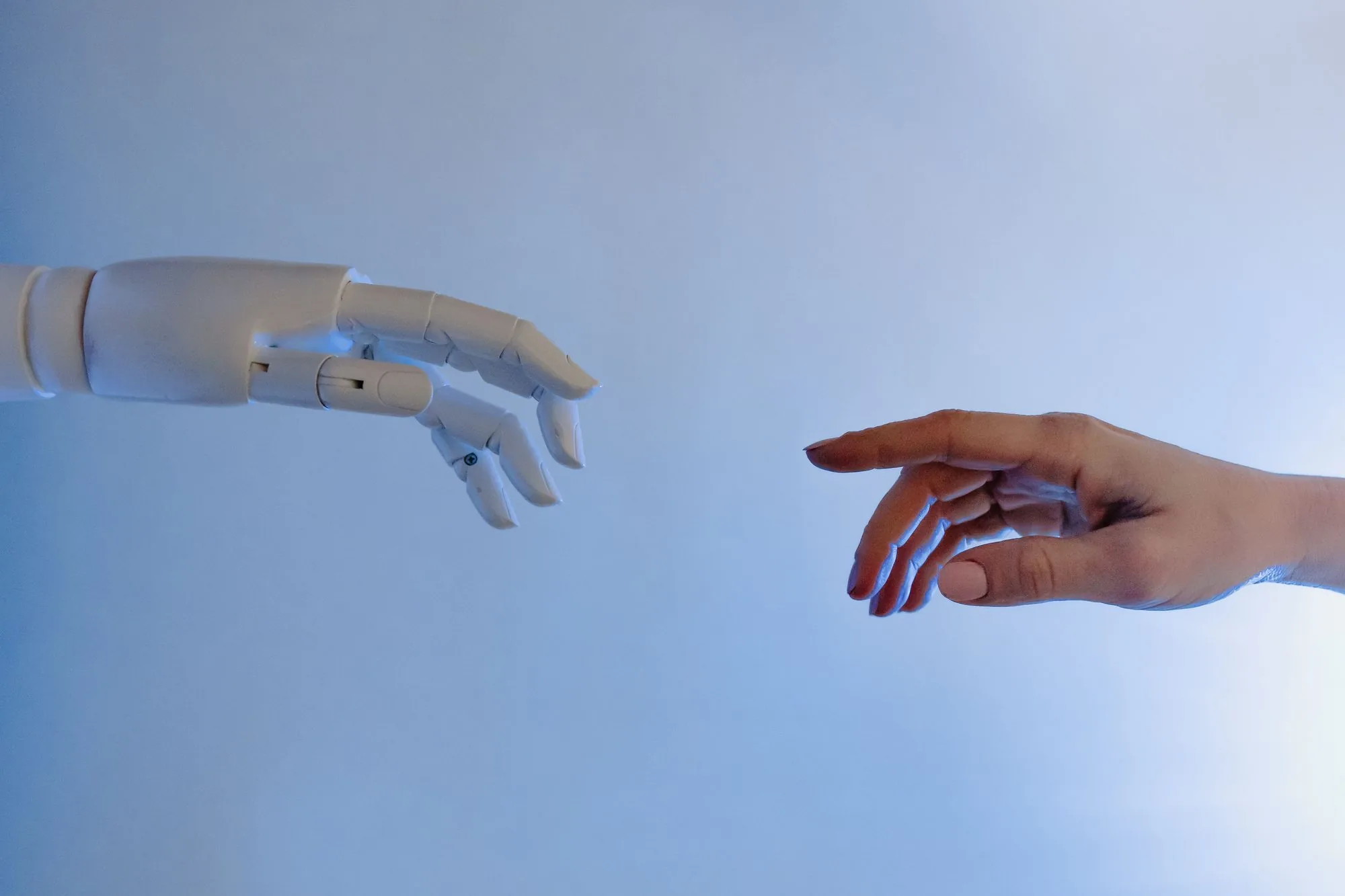
In the age of AI, proving you created your own work is getting harder. Even the introduction of Claude’s watermark doesn’t necessarily prove that AI created something or that the absence of one proves a human created it. And coders have already found ways of removing it.
The concept of “Proof of Human” is emerging alongside increasingly advanced AI, with creatives already seeking ways to demonstrate human involvement in their work. Andrew Melchior, a creative technologist and producer who has worked with the likes of Björk and Massive Attack, founded Genotone to help protect copyrighted music and give artists greater control over how their work is used by AI music companies such as Udio, Suno and Klay.
Proof of human puts some of that control back into the hands of creatives. Alongside it, we’re also seeing the development of Proof of Personhood systems designed to verify that someone online is a real person rather than an AI agent or bot, aimed at protecting systems against Sybil attacks and the spread of disinformation. The two aren’t quite the same, but they’re responding to a similar problem: being human online is becoming something we increasingly need to prove.
And this idea isn’t entirely new. The use of two-step verification has doubled since 2017 as platforms have introduced additional ways of verifying identity and protecting accounts. But AI adds another layer to the problem. Increasingly, it isn’t only our identity we may need to verify, but whether the person, voice or piece of work we’re interacting with has a human behind it at all.
Could human-made become a market of value?
Until recently, there was an assumption that a book had an author, a photograph had a photographer and a person speaking on a video was a real actor. AI has weakened that assumption. A face doesn’t need a person behind it. A book doesn’t need a writer. A campaign doesn’t need a photographer, illustrator or copywriter.
We’ve already seen this happen in other industries. When products are mass-produced, terms like homemade and locally produced can become ways of communicating how something came into existence and the value placed on that process. Sometimes, those indicators come with a higher price tag. So, could creative work follow the same path? Could “human-made” itself become a marker of value?
And that’s where Claude’s watermark comes back into the conversation. It approaches the problem from the other direction. Instead of proving something was made by a person, it leaves a machine-readable signal that AI may have been involved.
But as AI becomes embedded into everything from proofreading to image generation, identifying what AI has touched won’t necessarily tell us everything we want to know. We may increasingly care about where the human contribution sits too.
For years, the challenge was teaching machines to create things that felt human. Now that they’re capable of doing it, the challenge may become proving that something is actually human.
Human-made might not guarantee quality. But in a world where human involvement can no longer be assumed, it could become something worth knowing.
So, Should AI Content Be Watermarked?
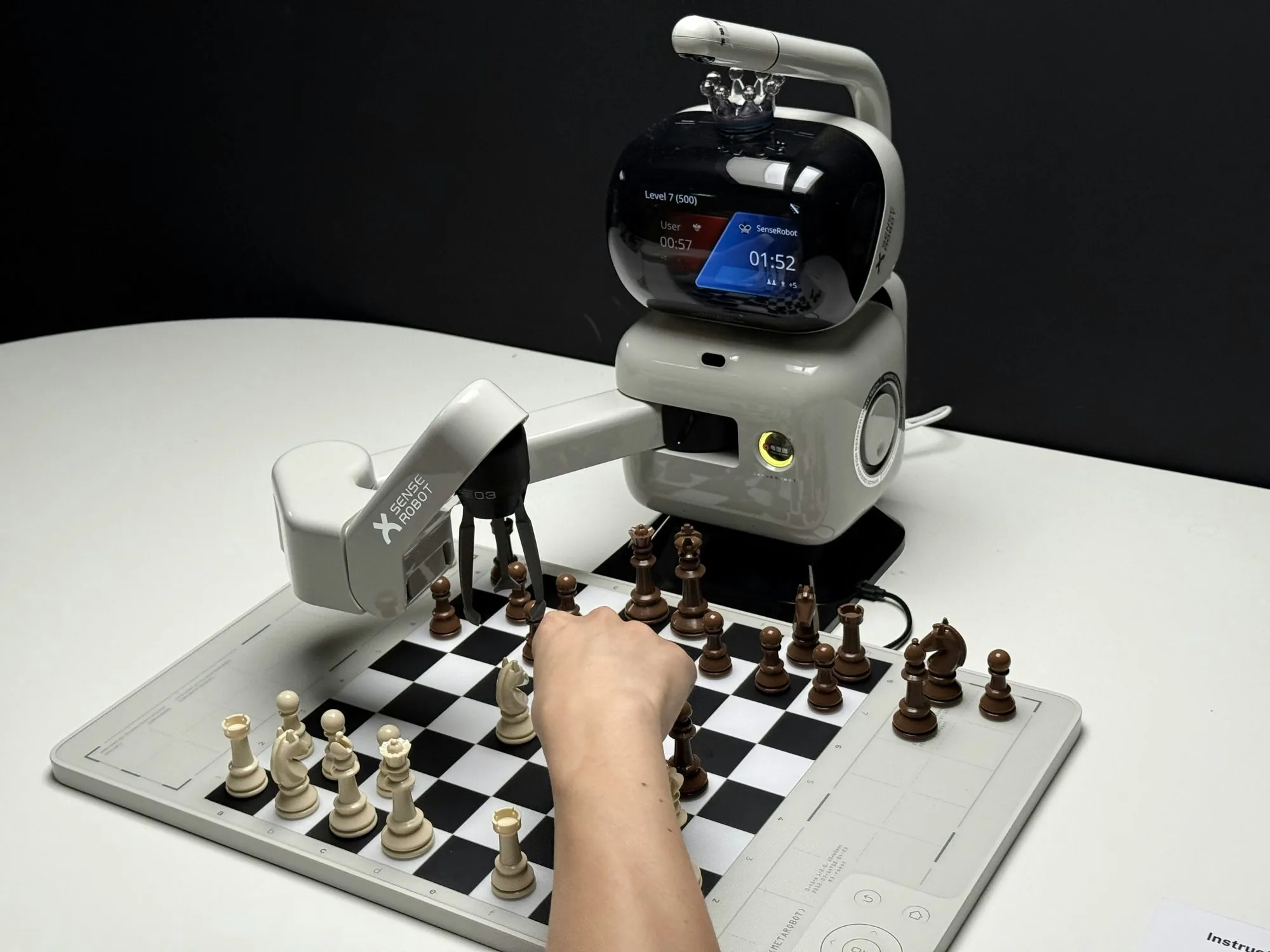
After all this, it's easy to say that Claude's watermark creates more problems than it solves. It can be removed; it can't tell us how much AI was involved and, as we've highlighted, there's a big difference between asking AI to proofread a sentence and asking it to create an entire piece of work.
But doing nothing isn't necessarily the answer either.
The EU has already decided that greater transparency is necessary. Article 50 of the AI Act requires providers of certain generative AI systems to make AI-generated or manipulated content detectable in a machine-readable format. Deepfakes and certain AI-generated text published on matters of public interest also carry disclosure requirements.
And what happens when a watermark isn't enough?
If we can't always rely on AI detectors to tell us whether a human or a machine created something, can we at least become better at recognising it ourselves? Penn Engineering has created RoFT, a tool that challenges users to identify the point at which human-written text switches to AI-generated writing.
AI literacy may become just as important as AI transparency. We teach children to question sources and think critically about what they find online. As AI content becomes more convincing, understanding how to question the origins of what we read, watch and listen to may need to become part of that education, too. Because in the end, no single watermark, detector or human eye is likely to solve the problem alone.
And maybe this is what Claude’s watermark has exposed. AI is no longer something we can separate from human work. It can correct a comma, translate a paragraph, develop an idea or generate an entire campaign. Knowing AI was involved is useful, but without knowing how it was involved, we’re still missing part of the story and the human effort that went into it may be disregarded.
That doesn't make transparency less important. But transparency needs context. A watermark should give people information, not make the judgement for them. And that makes Proof of Human just as important as Proof of AI, giving audiences enough information to understand the difference and decide what they value for themselves.
The debate isn't simply about whether to watermark. It's whether we can create transparency without reducing every interaction with AI to the same level.
We've spent years making AI better at writing, speaking, creating and behaving like us. But as the difference between human and machine becomes harder to see, knowing that difference may become more important than ever.
FAQs
What is Claude's watermark?
Can Claude's watermark be removed?
What is an AI watermark?
Does all AI-generated content have a watermark?
What does Proof of Human mean?
Are AI detectors 100% accurate?
Spotting AI used to feel easy. Six fingers in an image. A suspiciously polished paragraph, a flat, robotic voice. An abundance of em dashes and the infamous “it’s not X, it’s Y” sentence structure.
But the tells are getting harder to spot.
AI can now write, speak, design and generate video with increasing realism. And as technology improves, the line between what is created by a person and by a machine is becoming difficult to distinguish. And this raises a bigger question. If we can’t tell when AI made something, should we be told?
Anthropic’s decision to add an invisible watermark to Claude attempts to answer this question. But it has also become the catalyst for a much bigger conversation around trust, transparency, creativity and the value we place on human involvement.
Claude's Watermark Has Started a Bigger Conversation
Claude recently announced it will be adding an invisible “watermark” to its text. It works by subtly influencing the probability of which words Claude chooses as it generates a response, creating a detectable pattern within the text itself.
The move comes ahead of new transparency requirements under Article 50 of the EU AI Act, which aim to make AI-generated content more identifiable and reduce the risk of deception and manipulation.
AI has been at the centre of spreading disinformation, hate speech and polarising content, such as the AI-generated robocall that mimicked the voice of the then-President of the USA, Joe Biden, in January 2024, telling New Hampshire voters to skip the primary. This clip was estimated to target as many as 25,000 households before it was identified as fake.
AI literacy is a must in today’s world to decipher whether content is real or fake. But as AI continues to develop at such a fast pace, many people are finding it harder to keep up.
With misinformation continuing to spread, there is a clear argument for making AI-generated content easier to identify. Watermarking could give people another way to distinguish synthetic content from genuine material, helping to limit the potential for AI-generated content to be used deceptively.
Yet Claude’s watermark announcement had a polarising effect, with many people unhappy and worried that their work would be marked as AI-generated content. How it works and whether it will impact all work, including coding, remain relevantly vague at this time.
If Everyone's Using AI, Why Don't We Want Anyone to Know?
People and businesses have freely adopted AI, with around 77% of companies pushing AI on workers. And while AI adoption continues to grow, transparency in its use has not yet kept up.
Before the EU AI Act, there was no single law requiring disclosure of AI use. Existing consumer protections could still apply to AI, such as the FTC warning that using AI to deceive consumers constituted as deception under Section 5, but businesses still had considerable freedom to decide when, where and how they disclosed their involvement.
And that involvement is growing. AI-generated actors promote products; AI can write the copy, create the imagery and produce the video behind a campaign. More companies openly talk about becoming “AI-first”, while others are careful to reassure customers that their work remains “human-led”, but to what extent?
Duolingo experienced this tension after announcing its shift towards becoming an “AI-first” company and reducing its reliance on work contracts that AI could perform. But this announcement prompted public backlash, with users threatening to cancel subscriptions.
So, does this example act as a warning to people and companies? That admitting AI usage could risk losing users? The answer may lie in the gap between AI adoption and AI trust. While the use of AI has become increasingly common, only 46% of people globally say they’re willing to trust AI systems, according to KPMG.
But there may also be a question of value. We're happy to use AI ourselves to speed up a process, generate ideas or make a task easier. But when we’re paying a company for its expertise or service, discovering that AI is doing some of that work can feel different. If the same AI tools are available to us, what exactly are we paying for? We may be comfortable using AI ourselves, but not necessarily comfortable paying someone else to use it on our behalf.
So, What Actually Counts as AI-Generated?
One of the main issues around Claude’s watermark is: what counts as AI-generated content?
Creating content from scratch using AI models is a hard yes. But what about proofreading? What about translating work, summarising research or suggesting a different way to phrase a sentence. All of these involve AI, but could original work still end up carrying Claude’s mark?
Anthropic acknowledges that detecting its watermark doesn’t prove Claude wrote it, only that Claude “may have processed” the content. But this distinction is essential when a client, employer or lecturer could interpret the consequences of an AI marker as evidence that AI created the work.
The problem becomes even more complicated when we look at AI detection itself. MIT tells lecturers that AI detectors don’t work reliably enough to serve as definitive evidence, warning that high error rates can lead instructors to accuse students of misconduct falsely. Instead, it recommends looking at the work itself and using human judgement when concerns arise.
There’s irony there. We’ve built AI-powered tools to tell humans whether AI wrote something, while research suggests that humans recognise AI texts slightly better than AI detectors.
As AI becomes embedded in the tools we use every day, the line between human-created and AI-generated work will only become harder to draw. If we’re going to demand greater transparency around AI, identifying whether it was involved isn’t enough. We need to understand how it was involved.
What Do We Lose When AI Gives Us the Perfect Answer?
AI has brought speed and efficiency to the way we work and search, with small businesses increasingly using AI to help them do more with fewer resources. People are no longer performing multiple searches to find an answer; more than one-third now use AI to help with search, providing conversational, immediate answers rather than relying on a traditional search bar.
But we aren’t just using it to find answers. We’re asking it to explain problems, rewrite sentences and turn half-formed ideas into something polished. In China, one national survey found that 21% of primary and secondary students said they would rather rely on AI than think independently.
AI promises us a world without mistakes
As we become more accustomed to getting answers immediately, it’s important to remember why friction matters. Errors have rarely been seen as positive, in both professional and personal settings. Yet research shows that making and then correcting errors during training can benefit learning and reduce the likelihood of making the same mistakes in the future.
Being told what to do and following a rule book doesn’t make you an expert. Understanding what can go wrong, why it went wrong and how to prevent it from happening again does.
This becomes particularly important in education. UNESCO notes that when AI tools are designed to encourage reasoning, they can improve learning outcomes. But when they only provide an answer, students learn less. And if there are no regulations around the use of AI, when we can skip to the answer, we also start skipping the thinking that helps us understand how we got there.
What happens when AI shapes how we grow up?
This question becomes even more important for children who are growing up in an AI-powered world.
Schools were initially quick to restrict it, but AI is becoming increasingly embedded in education. The Economist reports that 61% of pupils and 69% of teachers use AI to help with schoolwork. AI can now act as a tutor, explain complex concepts and provide individualised support that was once hard to provide.
At a school in Flanders, Belgium, around 4,000 students are using AI-powered reading tools from Microsoft. This technology is designed to provide more individualised support based on differences in background, culture and language. Examples like this show the other side of the argument: AI doesn’t have to replace learning. Used well, it could make learning more accessible and personalised.
But personalisation comes with its own questions. Algorithms learn what we like and give us more of it. For a child whose understanding of the world is still developing, an experience constantly shaped around their existing preferences could reduce exposure to unfamiliar ideas and perspectives.
In the world of algorithms, AI seeks to enforce your likes, exposing you only to what appeals to you. When a child who is not yet developed is forced into an echo chamber, it limits their perspective. Then there’s the human imperfection AI can remove.
Chatbots are often designed to be accommodating, removing some of the disagreement and friction that naturally comes with human interaction. For children still developing socially, this raises another question around what could be lost when an increasingly personalised digital world becomes easier to navigate than an imperfect human one.
Researchers at the Oxford Internet Institute (OII) analysed more than 400,000 responses from five AI systems and found that friendlier answers contained more mistakes. And here lies the issue of a perfect world crafted by AI. It can still make mistakes.
And that's why enforcing the idea of perfection through AI doesn't remove mistakes. It risks weakening our own ability to recognise them.
Companies Are Choosing AI. Are Their Customers?
Many businesses have hopped on the AI train. A tool that offers more work with fewer resources.
In Ireland, around 74% of businesses use AI, while globally, some employers have begun explicitly linking job cuts and changes to their workforce to the efficiencies AI can provide. AI was cited in 8% of job-cut plans analysed in 2026, while IBM CEO Arvind Krishna has said the company replaced hundreds of HR roles with AI, according to The Wall Street Journal.
From a business perspective, it’s easy to understand the appeal. If AI can complete repetitive tasks faster, operate around the clock and reduce costs, why choose a human who will cost more and work at a slower pace?
But Claude’s watermark introduces another consideration. If AI use becomes increasingly visible, will businesses be as comfortable replacing human work when their customers see exactly where AI has been used?
Is the AI investment paying off?
For all the investment going into the technology, businesses are still trying to establish where the return will come from. One MIT study found that 95% of corporate AI investments have generated zero return at the time of publication. Economists and investors have begun questioning whether the current levels of AI spending are sustainable, prompting comparisons with previous technology bubbles.
For Ireland, the consequences of any major correction wouldn’t stay in Silicon Valley. With many of the world’s largest US technology companies having a significant presence here, Irish government analysis found that a major US equity correction could weaken domestic investment and employment growth. The report also warned that a disorderly correction linked to the AI boom could have wider economic consequences beyond falling share prices.
This highlights the growing concern around our reliance on AI. Businesses and economies are betting heavily on a technology whose long-term returns are still being established. And with all this investment, one vital component can be left out of the conversation: do customers actually want AI?
But do customers actually want AI?
PR Newswire reports that nearly three in four Gen Z consumers have taken direct action against a brand after encountering AI-generated marketing, such as unfollowing or unsubscribing. With the oldest members of Gen Z now approaching 30, this isn’t a future generation of consumers brands can worry about later. They’re already customers, employees and decision-makers.
Of course, not every use of AI is visible or likely to matter to a customer. Using it to support repetitive back-office processes is very different from replacing the person a customer speaks to, the illustrator behind a campaign or the writer developing a brand’s voice. In those situations, human involvement may be a part of what the customer thought they were paying for in the first place.
Take a marketing agency. If a client discovers that much of the work they’re paying an agency to produce is being generated using the same AI tools they can access, it’s reasonable for them to question what they are actually paying for.
That’s the other side of AI accessibility. Businesses can use AI to reduce costs and speed up production, but their customers have access to many of the same tools. And if AI can produce more for less, businesses need to be clearer about where their value comes from beyond production alone.
If AI Can Make Anything, What Makes It Creative?
There is no limit to human creativity, but there is a limit on time. In “Outliers”, Malcolm Gladwell popularised the idea that becoming a master of something, from music to chess, takes around 10,000 hours. The theory has since been challenged and widely debated, but the broader point remains: getting good at something takes time.
Just as it has in business, AI can speed up the creative process, generating images, prototypes, copy and video in minutes. But throughout history, artists haven’t only been valued for what they make. The thinking, experimentation and time behind the work matter too. And what AI cannot do is think with intention.
So, what happens when we remove the work of making from the equation? And can something be considered art in the same way when there isn’t an artist behind it? AI can draw from a vast amount of existing material, but it doesn’t have a childhood and can’t experience grief or love. But designers, musicians, writers and painters do and from their own experience they can create.
Marcel Duchamp famously challenged the definition of art with the “Fountain”, forcing the art world to consider whether the artist’s idea and intention could matter more than the physical act of making something. A century later, AI presents us with a strangely similar question: if an image takes less time to generate than it takes to make a cup of coffee, does that change the value we place on it?
Some artists have welcomed that challenge. Artist Matt Saunders has argued that having creatives' habits and assumptions challenged is a good thing. Photoshop faced its own scepticism before becoming another tool in the creative toolkit and AI may follow a similar path. And we are already seeing a rise in artists using AI as a medium of expression, incorporating it into work rather than handing the creative process over to it entirely.
When AI becomes the creator, not the tool
But there’s a difference between a creative choosing to use AI and a company choosing AI instead of a creative. And that’s where transparency starts to matter again. If something is being sold to us as a book, an artwork or a piece of creative expression, should we know whether there was actually a writer or an artist behind it?
We’re already seeing what happens when that distinction disappears online. One of the clearer examples is the rise of AI-generated books promoted across social media. Videos on TikTok use familiar recommendations like “everyone is gatekeeping this book” or “this book changed my life”, creating an impression of genuine readers recommending genuine authors.
One book we investigated and one that repeatedly appeared in the comment sections was Princess of Attraction by Elena Grace. Looking further into it, the website presents an author image that appears AI-generated alongside a claim of 7,192 reviews averaging 4.7 stars, although we couldn't find evidence on the site showing where those reviews came from. It's an example of how difficult it can now be to establish what, or who, sits behind the creative products being promoted online.
And while AI is being used to replace creatives, The Washington Post revealed that Anthropic’s Project Panama involved purchasing millions of physical books, cutting off their spines, scanning them and using the resulting digital copies to help train Claude. Bookshop owners in the UK and Ireland have noticed unusual orders that do not follow typical grouping patterns by theme, such as romance or sport.
Anthropic’s approach raises another concern: it runs the risk of other AI companies following a similar path, increasing demand for physical creative work only for it to be digitised, used for AI development and potentially destroyed in the process.
So two things can be true at once. AI can become a new medium through which people can create, while also enabling businesses to reduce their reliance on creators whose work helped make their systems possible. And perhaps that's where the distinction matters. The question isn't whether AI can create something. We already know it can. It's whether we still care who, if anyone, was behind it.
Welcome to the Age of Proof of Human
In the age of AI, proving you created your own work is getting harder. Even the introduction of Claude’s watermark doesn’t necessarily prove that AI created something or that the absence of one proves a human created it. And coders have already found ways of removing it.
The concept of “Proof of Human” is emerging alongside increasingly advanced AI, with creatives already seeking ways to demonstrate human involvement in their work. Andrew Melchior, a creative technologist and producer who has worked with the likes of Björk and Massive Attack, founded Genotone to help protect copyrighted music and give artists greater control over how their work is used by AI music companies such as Udio, Suno and Klay.
Proof of human puts some of that control back into the hands of creatives. Alongside it, we’re also seeing the development of Proof of Personhood systems designed to verify that someone online is a real person rather than an AI agent or bot, aimed at protecting systems against Sybil attacks and the spread of disinformation. The two aren’t quite the same, but they’re responding to a similar problem: being human online is becoming something we increasingly need to prove.
And this idea isn’t entirely new. The use of two-step verification has doubled since 2017 as platforms have introduced additional ways of verifying identity and protecting accounts. But AI adds another layer to the problem. Increasingly, it isn’t only our identity we may need to verify, but whether the person, voice or piece of work we’re interacting with has a human behind it at all.
Could human-made become a market of value?
Until recently, there was an assumption that a book had an author, a photograph had a photographer and a person speaking on a video was a real actor. AI has weakened that assumption. A face doesn’t need a person behind it. A book doesn’t need a writer. A campaign doesn’t need a photographer, illustrator or copywriter.
We’ve already seen this happen in other industries. When products are mass-produced, terms like homemade and locally produced can become ways of communicating how something came into existence and the value placed on that process. Sometimes, those indicators come with a higher price tag. So, could creative work follow the same path? Could “human-made” itself become a marker of value?
And that’s where Claude’s watermark comes back into the conversation. It approaches the problem from the other direction. Instead of proving something was made by a person, it leaves a machine-readable signal that AI may have been involved.
But as AI becomes embedded into everything from proofreading to image generation, identifying what AI has touched won’t necessarily tell us everything we want to know. We may increasingly care about where the human contribution sits too.
For years, the challenge was teaching machines to create things that felt human. Now that they’re capable of doing it, the challenge may become proving that something is actually human.
Human-made might not guarantee quality. But in a world where human involvement can no longer be assumed, it could become something worth knowing.
So, Should AI Content Be Watermarked?
After all this, it's easy to say that Claude's watermark creates more problems than it solves. It can be removed; it can't tell us how much AI was involved and, as we've highlighted, there's a big difference between asking AI to proofread a sentence and asking it to create an entire piece of work.
But doing nothing isn't necessarily the answer either.
The EU has already decided that greater transparency is necessary. Article 50 of the AI Act requires providers of certain generative AI systems to make AI-generated or manipulated content detectable in a machine-readable format. Deepfakes and certain AI-generated text published on matters of public interest also carry disclosure requirements.
And what happens when a watermark isn't enough?
If we can't always rely on AI detectors to tell us whether a human or a machine created something, can we at least become better at recognising it ourselves? Penn Engineering has created RoFT, a tool that challenges users to identify the point at which human-written text switches to AI-generated writing.
AI literacy may become just as important as AI transparency. We teach children to question sources and think critically about what they find online. As AI content becomes more convincing, understanding how to question the origins of what we read, watch and listen to may need to become part of that education, too. Because in the end, no single watermark, detector or human eye is likely to solve the problem alone.
And maybe this is what Claude’s watermark has exposed. AI is no longer something we can separate from human work. It can correct a comma, translate a paragraph, develop an idea or generate an entire campaign. Knowing AI was involved is useful, but without knowing how it was involved, we’re still missing part of the story and the human effort that went into it may be disregarded.
That doesn't make transparency less important. But transparency needs context. A watermark should give people information, not make the judgement for them. And that makes Proof of Human just as important as Proof of AI, giving audiences enough information to understand the difference and decide what they value for themselves.
The debate isn't simply about whether to watermark. It's whether we can create transparency without reducing every interaction with AI to the same level.
We've spent years making AI better at writing, speaking, creating and behaving like us. But as the difference between human and machine becomes harder to see, knowing that difference may become more important than ever.
FAQs
What is Claude's watermark?
Can Claude's watermark be removed?
What is an AI watermark?
Does all AI-generated content have a watermark?
What does Proof of Human mean?
Are AI detectors 100% accurate?