SEO Strategy: A Complete Guide to Improving Your Google Rankings
Search visibility is shaped by more than keywords. Here's what actually drives a strong SEO strategy and sustainable Google rankings.

To improve Google rankings, businesses require a strong SEO strategy.
A successful strategy combines:
Keyword research
Site architecture
Content organisation
Topic clusters
Internal linking
Technical SEO
On-page optimisation
E-E-A-T signals
Authority building
These elements help search engines and AI-powered platforms understand your website, boost visibility, attract more organic traffic and create new opportunities to appear in search and AI-generated answers.
In this guide, we'll explore how each element contributes to a successful SEO strategy and long-term search performance.
WHAT IS AN SEO STRATEGY?
An SEO strategy is the framework that helps your business improve search visibility, attract qualified traffic and achieve sustainable organic growth. Traditionally, SEO strategies focused on three core areas:
Technical SEO
On-page SEO
Off-page SEO
While these elements remain essential, search behaviour is evolving. According to McKinsey, 50% of consumers now use AI-powered platforms, meaning businesses need to think beyond Google rankings alone. Your SEO strategy should therefore include AI search visibility and Generative Engine Optimisation (GEO).
WHY IS AN SEO STRATEGY IMPORTANT?
An SEO strategy provides the direction needed to improve organic search and support long-term business goals, from increasing qualified traffic to generating leads without relying solely on paid search.
Without a clear framework in place, investing in content optimisation, technical improvements or authority-building activities as single entities may result in missed opportunities, leading to inconsistent results over time.
SEO is most effective when all elements work together. For example, investing in keyword research without addressing a website's technical health can reduce the effectiveness of your efforts.
Strong rankings are rarely achieved through a single activity. Instead, they are the result of multiple SEO elements working together to improve visibility, relevance and authority.
HOW DOES KEYWORD RESEARCH SHAPE YOUR SEO STRATEGY?
Keyword research helps identify the words and phrases people use when searching for products, services or information online.
It helps businesses understand what potential customers are looking for, so they can create the right pages and content to meet that demand.
A successful keyword strategy should consider:
Search demand: The products, services or questions people are searching for.
Search intent: Why someone is searching and what they expect to find.
Keyword difficulty: How competitive a keyword is to rank for.
Topic relevance: Whether a keyword aligns with the products, services and expertise of the business.
Long-tail keywords: More specific search terms that often attract highly qualified traffic.
Together, these insights help shape an SEO strategy by identifying the content, website pages and opportunities that are most likely to reach the right audience.
WHY IS TECHNICAL SEO THE FOUNDATION OF SEARCH PERFORMANCE?
Technical SEO focuses on the behind-the-scenes elements of a website that influence its performance, accessibility and usability for both users and search engines.
Technical SEO typically includes:
Website code: Clean, well-structured code helps search engines correctly interpret your website.
Page speed: Fast-loading pages keep visitors engaged. Google's Core Web Vitals measure key performance metrics, including loading speed, responsiveness and visual stability.
Mobile responsiveness: Websites should provide a consistent experience across desktops, tablets and mobile devices.
Website security: HTTPS helps protect user data and builds trust.
Crawlability and indexability: Important pages should be easy for search engines to discover and include in search results.
When these elements work together, they create a reliable technical foundation that supports content, website structure and every other aspect of SEO.
HOW DOES WEBSITE STRUCTURE INFLUENCE SEARCH VISIBILITY?
Website structure improves search visibility by helping search engines understand how your content is organised and how pages relate to one another. A clear structure makes it easier for search engines to crawl, index and rank your website, while helping users find the information they need.
Search engines use site architecture, navigation and internal linking to understand your website's purpose and identify which pages are most important. Without a clear structure, valuable pages may be harder to discover, understand and rank for relevant searches. This is why website design needs to incorporate SEO to help create a structure that is easy for both users and search engines to navigate.
Google doesn't favour websites; it favours user experience. Websites that are easy to navigate, logically organised and built around user search intent provide clearer pathways. This makes it easier to understand how content is connected and where users should be directed next.
WHAT IS SITE ARCHITECTURE?

Site architecture is the way a website’s pages, content and navigation are organised across a website.
This structure is often supported by:
Clear menu navigation: A clear menu helps users and search engines quickly access the most important sections of your website.
Breadcrumb navigation: Breadcrumbs show users where they are within your website and provide an easy way to return to previous sections.
Parent and child pages: Grouping related pages under broader categories helps organise content and makes it easier for users and search engines to understand how topics are connected.
Important pages accessible within a few clicks: Key pages, such as services or products, should be easy to reach from anywhere on your website, reducing unnecessary navigation and improving the user experience.
WHY IS CONTENT ORGANISATION IMPORTANT?
Content organisation makes your website easier to navigate. By grouping related pages, blogs and other content into logical topics, visitors can find what they need more quickly while search engines build a clearer understanding of your website and the expertise it offers.
Good content organisation includes:
Clear page categories: Group related pages and blogs together, so visitors can easily find information on the same topic.
Consistent heading structure: Use clear H1, H2 and H3 headings to break content into easy-to-read sections.
Topic-based content: Create multiple pieces of content around the same topic to build a more complete resource.
Content that matches search intent: Each page should answer a specific question or provide the information a visitor is looking for.
Logical user journey: Guide visitors to related pages, services or blogs through navigation, internal links and calls to action.
HOW DOES INTERNAL LINKING SUPPORT SEARCH VISIBILITY?
Internal linking helps Google discover, understand and prioritise the pages on your website. Connecting related content helps users find additional information they may be looking for and makes it easier for search engines to identify which pages are most relevant to different searches.
A strong internal linking strategy should:
Connect related content: Help users and search engines understand how pages relate to one another.
Prioritise key pages: Link regularly to important service, product and category pages.
Use descriptive anchor text: Make it clear where each link leads.
Guide users to the next step: Link to relevant pages that continue the user's journey.
Ensure every page is discoverable: Avoid orphan pages by making every important page accessible through internal links.
WHY IS TOPICAL AUTHORITY IMPORTANT FOR RANKINGS?
Topical authority is Google's confidence that your website has in-depth knowledge of a particular subject. Rather than relying on individual pages, topical authority is built by creating related service pages, blogs and resources that comprehensively cover a subject and demonstrate expertise over time.
This comes back to user experience. Google discusses how topical authority helps identify helpful and relevant sources for specific subjects. Instead of assessing pages in isolation, it looks at how well a website covers a topic, helping users find information from sources with proven knowledge and experience.
HOW DO TOPIC CLUSTERS BUILD TOPICAL AUTHORITY?
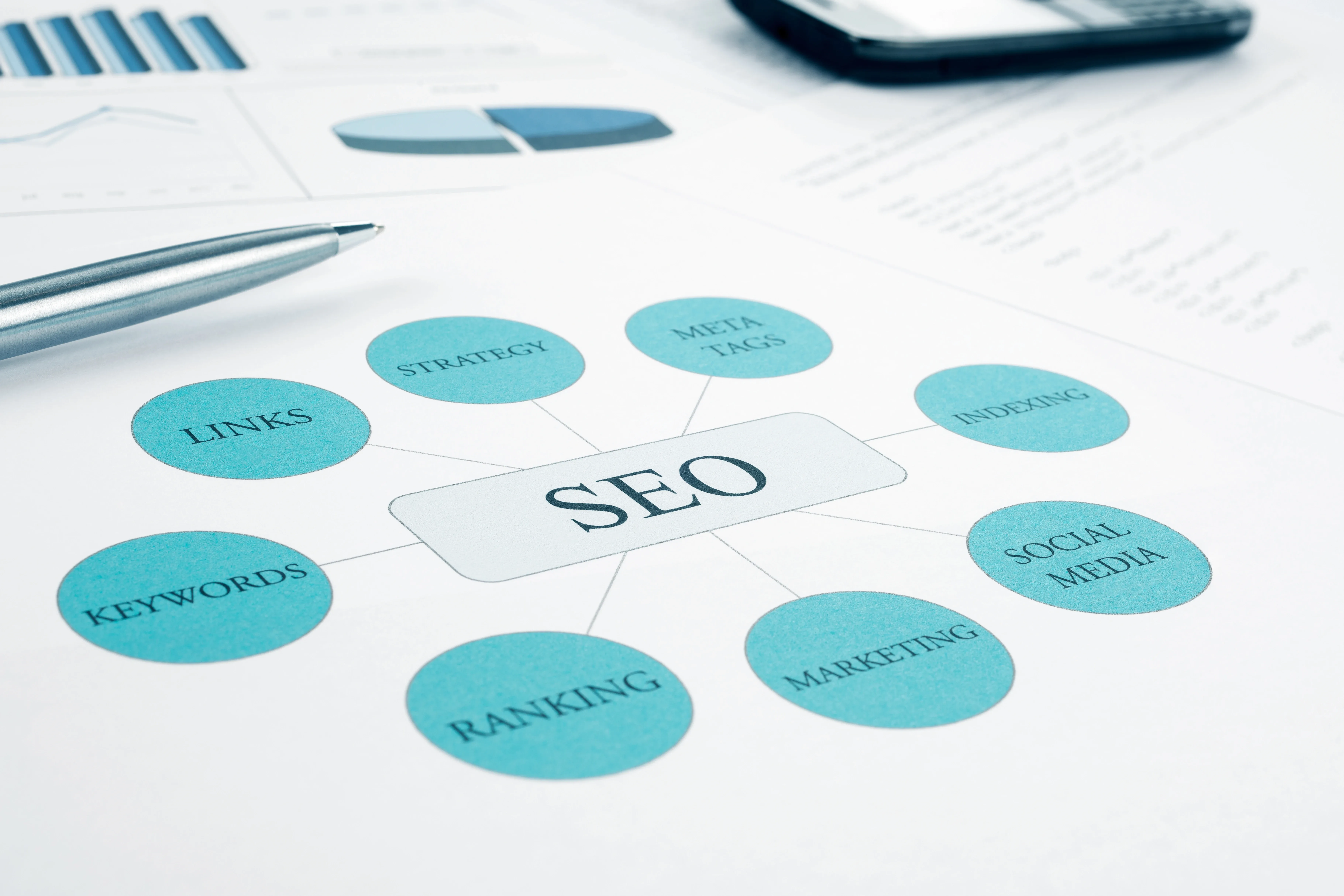
Topic clusters are groups of related pages and blog posts centred on a single main topic. They help build topical authority while strengthening keyword strategy, supporting internal linking and answering different search intents across the customer journey.
For example, an SEO Strategy pillar page could be supported by related pages covering:
Site Architecture
Technical SEO
Keyword Research
Internal Linking
E-E-A-T
AI Search
Together, these connected pages form a topic cluster that demonstrates expertise across a wider subject, helping search engines and AI-powered platforms understand the depth of your knowledge.
WHAT IS E-E-A-T AND WHY DOES IT MATTER FOR SEO?
E-E-A-T stands for Experience, Expertise, Authoritativeness and Trustworthiness. It’s part of how Google assesses the quality and credibility of content, helping identify whether information comes from reliable and knowledgeable sources.
Businesses can strengthen E-E-A-T by:
Sharing first-hand experience: Publish content based on real knowledge and practical experience.
Demonstrating expertise: Create accurate, helpful content that answers common customer questions.
Building authority: Earn mentions, backlinks and recommendations from reputable websites.
Establishing trust: Keep content up to date, cite reliable sources and make it clear who created the content.
E-E-A-T builds on every element of an SEO strategy. By combining high-quality content, technical SEO, keyword research and topical authority, businesses build trust and credibility over time.
These signals help search engines and AI-powered platforms recognise reliable sources of information and determine which content is most relevant to users.
WHY DOES SEO NEED AN AI SEARCH STRATEGY?
AI is changing how businesses operate and how people search for information. As organisations increasingly adopt AI to improve productivity, automate workflows and enhance customer experiences, consumers are also turning to AI-powered platforms to research products and compare services.
This shift is changing the role of SEO. Optimising for Google alone is no longer enough. As AI-powered search becomes more common, businesses also need to consider how their content is understood and referenced by AI platforms. Industry experts suggest AI is shifting SEO beyond keywords alone, placing greater emphasis on context, relevance and content quality.
AI is also changing how content is discovered online. As AI agents and automated systems consume more web content, businesses should create content that is clear, well-structured and easy for both people and AI systems to understand.
Businesses that invest in a strong SEO strategy today will be better positioned to increase visibility across both traditional search engines and AI-powered search experiences.
But the good news is that businesses don’t need to start from scratch. The same principles that support strong SEO can help content perform in AI search.
HOW TO BUILD AN SEO STRATEGY FOR LONG-TERM GROWTH
Building an SEO strategy starts with understanding your business goals and the audience you want to reach. A business should consider:
Identify the keywords your audience is searching for.
Build a technically sound website.
Organise content into clear topic clusters.
Strengthen internal linking and website structure.
Demonstrate E-E-A-T through high-quality, trustworthy content.
Build authority with a consistent off-page SEO strategy.
Adapt to evolving AI search experiences.
SEO isn’t about ticking off individual tasks; it’s about creating a connected strategy that helps improve Google rankings while supporting long-term organic growth.
For businesses looking to develop a more strategic approach, Studio East's SEO services focus on building sustainable growth through technical expertise, content strategy and long-term search performance. Speak to our team to explore how a tailored SEO strategy can support your business goals.