From Scrappy to Scalable: The AI Advantage for Small Businesses
Artificial intelligence (AI) is no longer a futuristic concept reserved for Silicon Valley giants. It’s here, it’s affordable, and it’s surprisingly useful — even in its early stages.
Scroll Down ↓

For small businesses looking to work smarter, using AI as a tool to support their marketing efforts can free up time, make everyday tasks more efficient and help small teams do more with the resources they already have.
But why has AI become such a big part of modern marketing and, more importantly, where can it actually add value for a small business?
The answer isn’t to automate everything. It’s knowing where AI can save time, uncover useful information or speed up the work your team is already doing.
What is AI marketing?

AI marketing is the use of artificial intelligence to support, automate or improve marketing tasks.
That can mean everything from generating content ideas and automating email campaigns to analysing customer data, supporting SEO research and personalising digital experiences.
For small businesses juggling limited time and resources, these tools can make certain marketing capabilities more accessible without requiring a specialist for every individual task.
But AI works best as part of a wider strategy. The tool can help you get somewhere faster, but you still need to know where you’re going.
AI marketing isn’t just for the giants
If you're thinking AI is still the domain of huge tech corporations, think again.
AI tools have become much more accessible, with businesses using them across content creation, data analysis, customer service, advertising and everyday administrative tasks. In late 2024, 71% of professionals surveyed worldwide reported that their organisations were regularly using generative AI in at least one business function.
For smaller marketing teams, that creates plenty of practical opportunities. AI can help you:
Generate and refine content ideas
Automate repetitive marketing tasks
Analyse large amounts of information more quickly
Personalise communications using customer data
Summarise performance and identify patterns
In other words, it can give a small team more capacity. But having access to the same technology as a larger competitor doesn’t automatically level the playing field. How effectively you use it still comes down to your strategy, data, creativity and understanding of your audience.
As we’ve explored before, AI is most useful when treated as a creative assistant rather than a replacement for human thinking.
How are small businesses using AI in marketing?
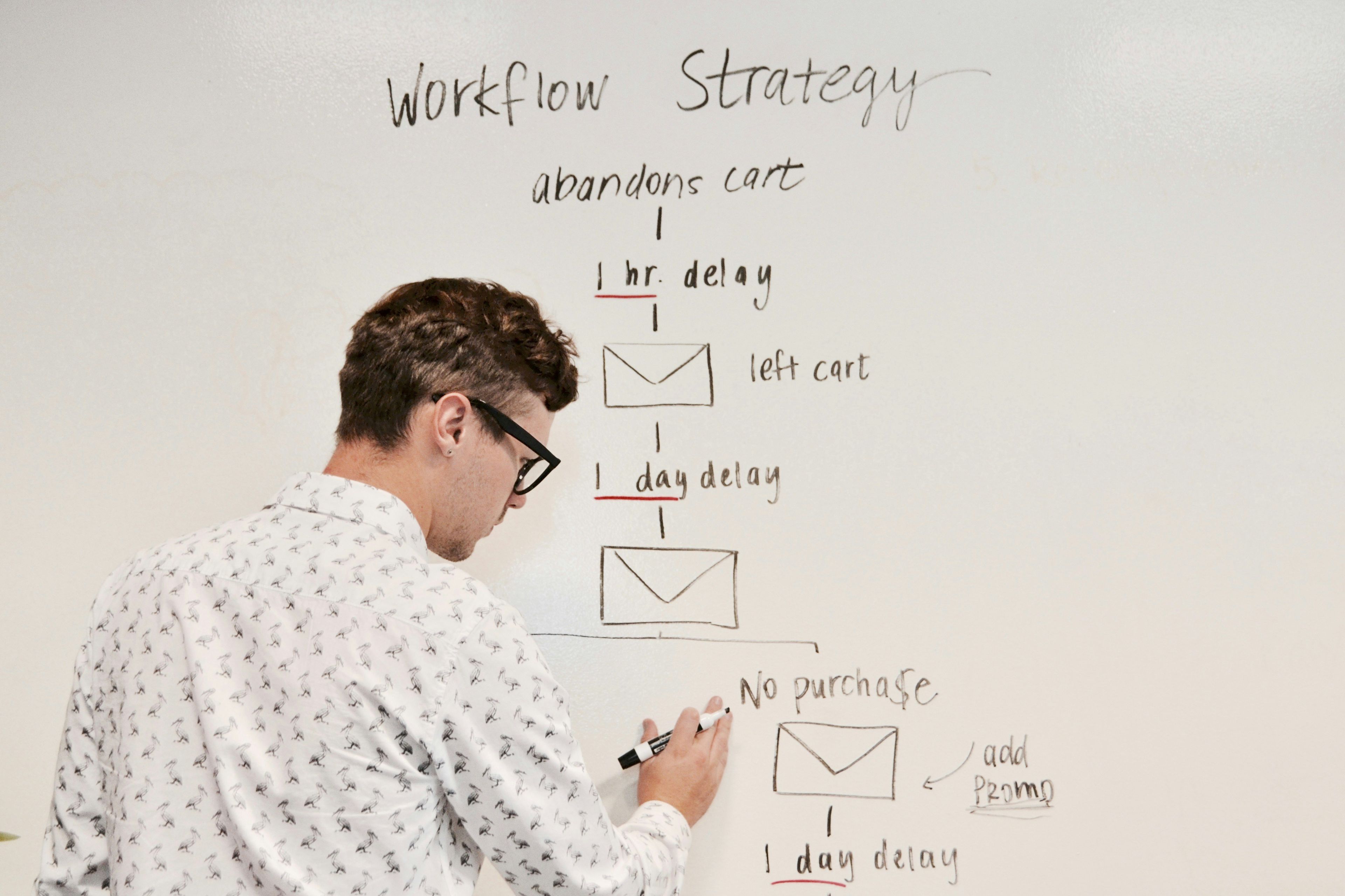
AI is already being used across many of the everyday tasks that make up a marketing strategy. A global survey on marketing automation found businesses were using automation across areas including email marketing, social media, content management, paid advertising and SMS marketing.
That includes:
Content creation: brainstorming ideas, creating first drafts and repurposing existing content
Email marketing: supporting segmentation, personalisation and campaign creation
Social media: generating ideas, adapting content and analysing performance
Paid advertising: developing creative variations and supporting campaign analysis
SEO: assisting with keyword research, content planning and metadata
Research and insights: processing information and identifying patterns in customer, competitor and market data
AI can help turn that information into useful patterns and observations. Combined with a data-driven approach to branding, these insights can help businesses better understand their audiences and inform marketing decisions.
These aren’t separate, futuristic areas of marketing. They’re jobs many small businesses already need to do.
The difference is that AI can speed up parts of the process. A task that once required hours of manual research or repetitive work may now take considerably less time, leaving your team to focus on the decisions that require human judgement.
But what about ROI?

The business case for AI shouldn’t simply be “everyone else is using it”.
Research from Deloitte’s State of Generative AI in the Enterprise has examined how organisations are measuring and generating value from generative AI initiatives. But for a small business, ROI doesn’t necessarily need to look the same as it does for a large enterprise.
Before investing in a new tool, consider what problem it’s actually solving. Does it reduce time spent on repetitive work? Help you make better use of existing data? Increase your team's capacity? Improve an existing process?
AI can create efficiencies, but adding more tools to your marketing stack without a clear purpose can just create more complexity.
For a small business, ROI might be measured in money saved, but it could also mean hours returned to the team, faster turnaround times or the ability to carry out work that previously wasn’t practical.
The important thing is to start with the outcome you want, rather than adopting AI for the sake of adopting AI.
AI marketing is changing quickly

AI’s role in marketing is still evolving.
Research such as Econsultancy’s Future of Marketing reflects how AI has become part of the wider conversation around where marketing is heading. Search platforms, advertising systems, social networks and content tools continue to integrate AI into their products.
That doesn’t mean small businesses need to chase every new platform or feature. In fact, constantly switching tools can quickly become a distraction.
A better approach is to understand where AI genuinely fits into your existing marketing processes. Start with a clear problem, test the technology and assess whether it actually improves the way you work.
How small businesses can use AI in marketing
AI marketing tools are best seen not as replacements, but as accelerators. The advantage comes from combining automation with strategic thinking, doing what you already do well but finding opportunities to do it more efficiently.
Here are a few areas where small businesses can start.
Smarter content creation
AI can help you:
Brainstorm blog, social and campaign ideas
Develop first drafts
Repurpose long-form content into different formats
Summarise research
Generate variations for testing
But publishing whatever an AI tool produces is unlikely to give you your best work. The output still needs fact-checking, editing and the perspective that makes it relevant to your audience.
More efficient email marketing
Depending on the tools you use, AI can support:
Subject line variations
Audience segmentation
Content personalisation
Campaign journeys
A/B testing
Performance analysis
Automation can take care of repetitive processes, while your team remains responsible for the strategy, messaging and customer experience behind them.
Easier search optimisation
AI can also support parts of your SEO workflow, including:
Keyword research
Content planning
Metadata
Content optimisation
Internal linking opportunities
Competitor and SERP analysis
It can speed up the process, but it can’t replace an understanding of search intent, your audience or your wider SEO strategy.
AI is also changing how people search. As AI-generated answers become part of the discovery process, businesses also need to consider Generative Engine Optimisation (GEO) alongside traditional SEO.
Why the human touch still matters

Despite the buzz, AI isn't a silver bullet.
Using it effectively means knowing when it can help and when a person needs to take over. One of the most useful skills is learning how to give an AI tool enough context to produce something worthwhile. With 40% of marketers said AI skills are among the most important areas to develop over the next two years
That means:
Setting clear context
Being specific about the audience and desired output
Providing relevant information
Reviewing the response critically
Iterating and refining
The difference between a passable AI output and something useful, on-brand and accurate often comes down to the information you put in and what you do with the output afterwards.
And even the best AI tools can miss context, introduce inaccuracies or produce something that simply doesn’t sound like you. Human oversight remains essential for checking accuracy, making judgement calls and protecting the personality behind your brand.
That matters particularly as AI-generated content becomes more common. Humanising your brand gives people something more distinctive to connect with than content that could have come from almost anywhere.
Why should small businesses care about AI marketing?

Because time, money and capacity matter.
Small business owners and teams often wear multiple marketing hats, moving between content, social media, SEO, email, design, customer service and reporting.
AI can lighten some of that workload. It can help get a first draft moving, process information faster, automate repetitive tasks or uncover patterns in data that deserve a closer look.
But the goal shouldn’t be to use as much AI as possible. It should be to use it where it genuinely improves the way you work.
The businesses that get the most from these tools will be the ones that combine them with clear objectives, good data and human judgement. Your marketing and performance strategy still needs to determine what you’re trying to achieve. AI is one of the tools that can help you get there.
At Studio East, we help businesses make sense of new technology without losing sight of the people their marketing needs to reach. If you’re looking for smarter ways to approach your marketing, get in touch with Studio East.
For small businesses looking to work smarter, using AI as a tool to support their marketing efforts can free up time, make everyday tasks more efficient and help small teams do more with the resources they already have.
But why has AI become such a big part of modern marketing and, more importantly, where can it actually add value for a small business?
The answer isn’t to automate everything. It’s knowing where AI can save time, uncover useful information or speed up the work your team is already doing.
What is AI marketing?
AI marketing is the use of artificial intelligence to support, automate or improve marketing tasks.
That can mean everything from generating content ideas and automating email campaigns to analysing customer data, supporting SEO research and personalising digital experiences.
For small businesses juggling limited time and resources, these tools can make certain marketing capabilities more accessible without requiring a specialist for every individual task.
But AI works best as part of a wider strategy. The tool can help you get somewhere faster, but you still need to know where you’re going.
AI marketing isn’t just for the giants
If you're thinking AI is still the domain of huge tech corporations, think again.
AI tools have become much more accessible, with businesses using them across content creation, data analysis, customer service, advertising and everyday administrative tasks. In late 2024, 71% of professionals surveyed worldwide reported that their organisations were regularly using generative AI in at least one business function.
For smaller marketing teams, that creates plenty of practical opportunities. AI can help you:
Generate and refine content ideas
Automate repetitive marketing tasks
Analyse large amounts of information more quickly
Personalise communications using customer data
Summarise performance and identify patterns
In other words, it can give a small team more capacity. But having access to the same technology as a larger competitor doesn’t automatically level the playing field. How effectively you use it still comes down to your strategy, data, creativity and understanding of your audience.
As we’ve explored before, AI is most useful when treated as a creative assistant rather than a replacement for human thinking.
How are small businesses using AI in marketing?
AI is already being used across many of the everyday tasks that make up a marketing strategy. A global survey on marketing automation found businesses were using automation across areas including email marketing, social media, content management, paid advertising and SMS marketing.
That includes:
Content creation: brainstorming ideas, creating first drafts and repurposing existing content
Email marketing: supporting segmentation, personalisation and campaign creation
Social media: generating ideas, adapting content and analysing performance
Paid advertising: developing creative variations and supporting campaign analysis
SEO: assisting with keyword research, content planning and metadata
Research and insights: processing information and identifying patterns in customer, competitor and market data
AI can help turn that information into useful patterns and observations. Combined with a data-driven approach to branding, these insights can help businesses better understand their audiences and inform marketing decisions.
These aren’t separate, futuristic areas of marketing. They’re jobs many small businesses already need to do.
The difference is that AI can speed up parts of the process. A task that once required hours of manual research or repetitive work may now take considerably less time, leaving your team to focus on the decisions that require human judgement.
But what about ROI?
The business case for AI shouldn’t simply be “everyone else is using it”.
Research from Deloitte’s State of Generative AI in the Enterprise has examined how organisations are measuring and generating value from generative AI initiatives. But for a small business, ROI doesn’t necessarily need to look the same as it does for a large enterprise.
Before investing in a new tool, consider what problem it’s actually solving. Does it reduce time spent on repetitive work? Help you make better use of existing data? Increase your team's capacity? Improve an existing process?
AI can create efficiencies, but adding more tools to your marketing stack without a clear purpose can just create more complexity.
For a small business, ROI might be measured in money saved, but it could also mean hours returned to the team, faster turnaround times or the ability to carry out work that previously wasn’t practical.
The important thing is to start with the outcome you want, rather than adopting AI for the sake of adopting AI.
AI marketing is changing quickly
AI’s role in marketing is still evolving.
Research such as Econsultancy’s Future of Marketing reflects how AI has become part of the wider conversation around where marketing is heading. Search platforms, advertising systems, social networks and content tools continue to integrate AI into their products.
That doesn’t mean small businesses need to chase every new platform or feature. In fact, constantly switching tools can quickly become a distraction.
A better approach is to understand where AI genuinely fits into your existing marketing processes. Start with a clear problem, test the technology and assess whether it actually improves the way you work.
How small businesses can use AI in marketing
AI marketing tools are best seen not as replacements, but as accelerators. The advantage comes from combining automation with strategic thinking, doing what you already do well but finding opportunities to do it more efficiently.
Here are a few areas where small businesses can start.
Smarter content creation
AI can help you:
Brainstorm blog, social and campaign ideas
Develop first drafts
Repurpose long-form content into different formats
Summarise research
Generate variations for testing
But publishing whatever an AI tool produces is unlikely to give you your best work. The output still needs fact-checking, editing and the perspective that makes it relevant to your audience.
More efficient email marketing
Depending on the tools you use, AI can support:
Subject line variations
Audience segmentation
Content personalisation
Campaign journeys
A/B testing
Performance analysis
Automation can take care of repetitive processes, while your team remains responsible for the strategy, messaging and customer experience behind them.
Easier search optimisation
AI can also support parts of your SEO workflow, including:
Keyword research
Content planning
Metadata
Content optimisation
Internal linking opportunities
Competitor and SERP analysis
It can speed up the process, but it can’t replace an understanding of search intent, your audience or your wider SEO strategy.
AI is also changing how people search. As AI-generated answers become part of the discovery process, businesses also need to consider Generative Engine Optimisation (GEO) alongside traditional SEO.
Why the human touch still matters
Despite the buzz, AI isn't a silver bullet.
Using it effectively means knowing when it can help and when a person needs to take over. One of the most useful skills is learning how to give an AI tool enough context to produce something worthwhile. With 40% of marketers said AI skills are among the most important areas to develop over the next two years
That means:
Setting clear context
Being specific about the audience and desired output
Providing relevant information
Reviewing the response critically
Iterating and refining
The difference between a passable AI output and something useful, on-brand and accurate often comes down to the information you put in and what you do with the output afterwards.
And even the best AI tools can miss context, introduce inaccuracies or produce something that simply doesn’t sound like you. Human oversight remains essential for checking accuracy, making judgement calls and protecting the personality behind your brand.
That matters particularly as AI-generated content becomes more common. Humanising your brand gives people something more distinctive to connect with than content that could have come from almost anywhere.
Why should small businesses care about AI marketing?
Because time, money and capacity matter.
Small business owners and teams often wear multiple marketing hats, moving between content, social media, SEO, email, design, customer service and reporting.
AI can lighten some of that workload. It can help get a first draft moving, process information faster, automate repetitive tasks or uncover patterns in data that deserve a closer look.
But the goal shouldn’t be to use as much AI as possible. It should be to use it where it genuinely improves the way you work.
The businesses that get the most from these tools will be the ones that combine them with clear objectives, good data and human judgement. Your marketing and performance strategy still needs to determine what you’re trying to achieve. AI is one of the tools that can help you get there.
At Studio East, we help businesses make sense of new technology without losing sight of the people their marketing needs to reach. If you’re looking for smarter ways to approach your marketing, get in touch with Studio East.