SEO 101: A Blueprint for Businesses in 2025
Trying to master SEO can feel like chasing a moving target, with every trend and algorithm update changing the rules of the game.

Don’t let analysis paralysis slow you down. Focus on proven strategies that help you hit your targets. A great SEO strategy brings together the content your audience is searching for, a site that search engines can easily read, and an experience that keeps users moving forward.
Instead of getting caught in analysis paralysis, focus on tried-and-tested strategies to sharpen your aim.
1. Keywords: Say goodbye to cramming
Why it matters: Keywords are the search terms people use to find you online. Researching them is essential, but it’s not a silver bullet. Once you’ve found the right keywords, it’s all about using them with purpose.
What to do:
Use keyword research tools: Tools like Google Keyword Planner, aHrefs, SEMrush or Moz can show you exactly what your audience is searching for.
Focus on long-tail keywords: These longer, more specific phrases capture real intent. Picture someone searching for “best vegan pizza near me” instead of just “pizza.”
Consider search intent: Ask yourself what someone really wants when they type in a search. Are they after an answer, weighing up options or ready to buy? Make sure your content matches their intent, not just the keyword.
Pro tip: Keyword stuffing is old news. Google’s smarter, and so are your users. What works now is weaving keywords in naturally and focusing on context.

2. Quality content: Serve your audience, not your algorithm
Why it matters: Audiences are sharp. They stick around for content that answers their questions and gives them a reason to stay.
Strong SEO content starts with knowing what your audience needs. Search data shows you what people want, but real insight comes from using that information to shape your strategy.
What to do:
Compelling content is king: Clickbait is fading fast. Focus on clarity, insight and relevance in every post. Most importantly, make sure you’re adding value.
Update content regularly: Keep your useful pages accurate and relevant as your industry and audience evolve. A steady content strategy helps you balance fresh material with updates to what’s already working.
Embrace new formats: Mix it up with articles, videos, infographics and more to reach a wider audience.
Pro tip: Build a content calendar that keeps fresh ideas flowing and updates rolling. A regular schedule helps your SEO and shows your audience you’re a reliable resource.
3. On-page SEO: Make every page sparkle
Why it matters: Optimising every page helps search engines get what your content’s about and gives each page a better shot at ranking for the right searches.
What to do:
Optimise titles, headers and meta descriptions: Place keywords where they matter to help search engines and users quickly see what your page is about.
Amp up image optimisation: Use ALT text and clear file names. This helps search engines understand your content and makes your site more accessible.
Design user-friendly URLs: Clean, descriptive URLs set clear expectations for users and help search engines organise your content.
Build natural internal links: Connect relevant pages with descriptive anchor text, not just “click here.” Internal links help users find more of your content and give search engines extra context about your site’s structure.
On-page optimisation works best when it’s in sync with your whole site. Web design and SEO go hand in hand, from structure and navigation to content hierarchy and performance.
Pro tip: Stay proactive with on-page SEO. Regularly audit your pages to keep everything relevant and up to date.
4. Mobile optimisation: Engage on every screen
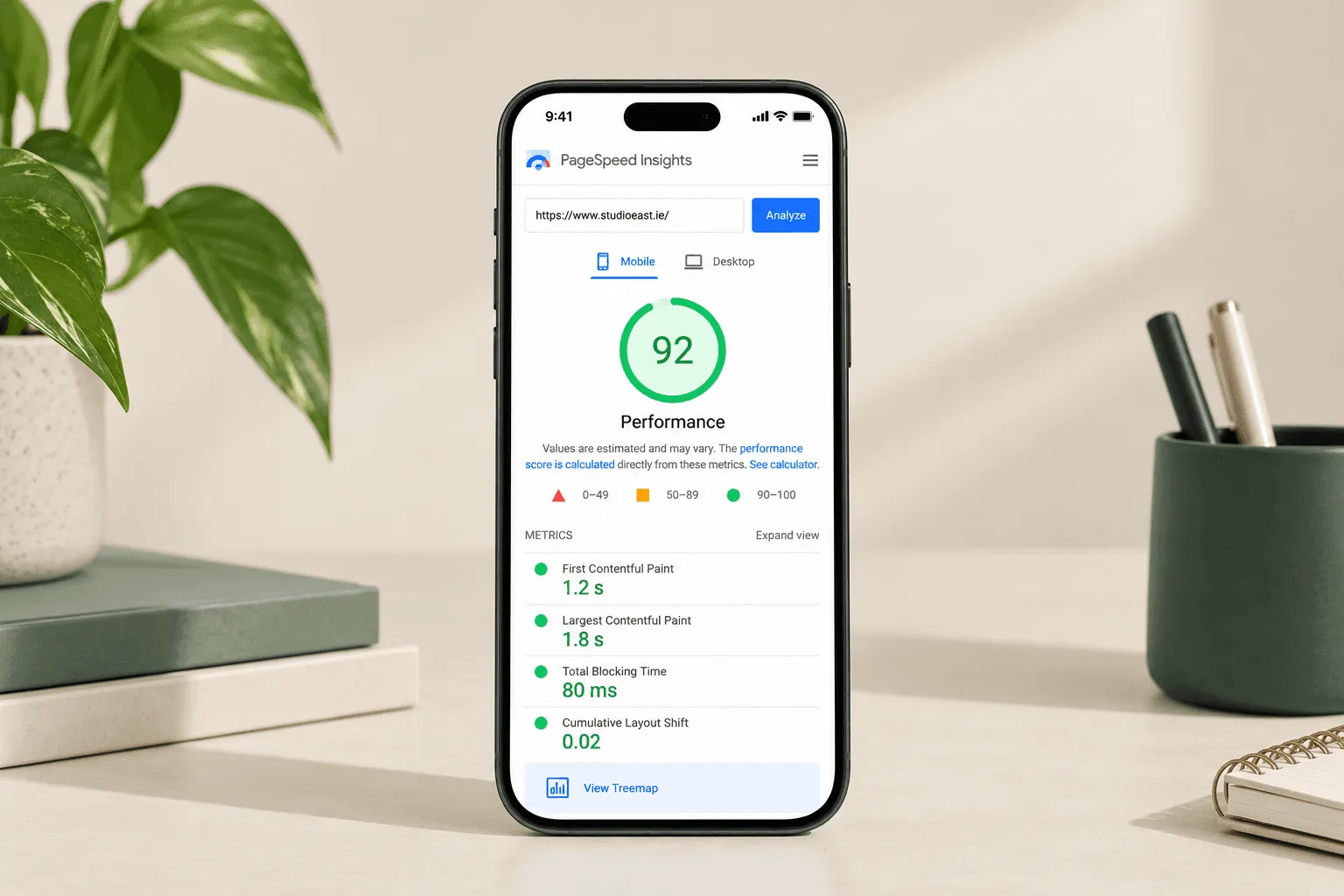
Why it matters: Be honest. Where do you do most of your scrolling? Mobile is more dominant than ever, and Google now includes mobile-friendliness as a factor when ranking results.
What to do:
Embrace responsive design: Keep your site looking sharp on all devices. Invest in responsive website design to guarantee a seamless experience, whether on a smartphone, tablet or laptop.
Test mobile performance: Use tools like Google PageSpeed Insights and the Google Chrome Lighthouse extension to test mobile performance for free.
Pro tip: Check mobile performance metrics regularly and solicit user feedback. Staying on top of the mobile experience in real time will help prevent issues and keep you at the top of the rankings.
5. Site speed: Every millisecond counts
Why it matters: Fast-loading sites make for a better user experience and can boost your search performance. No one wants to wait for a slow page, especially when there are plenty of other options out there.
What to do:
Compress images: Optimise image sizes and use efficient coding to speed up load times without losing quality.
Do a speed check: Use tools like Google PageSpeed Insights to spot and fix speed issues for a smoother browsing experience.
Monitor Core Web Vitals: Track Google’s Core Web Vitals to measure loading, responsiveness and visual stability. These metrics show you where the real user experience needs work.
Pro tip: Run a speed test after every major update. You’ll catch any performance dips before they affect your users.
6. User experience (UX): The blueprint for engagement

Why it matters: Great UX helps visitors find what they need, understand your content and take action. SEO gets people to your page, but their experience once they arrive is just as important.
What to do:
No-brainer navigation: A clear, intuitive layout makes it easy for users to find what they’re after. The aim is to keep people moving smoothly through your site.
Remember readability: Clean typography and plenty of space keep your site easy to read. Good UX writing makes navigation, buttons and forms simple to understand.
Prioritise key info: Make sure essential details are front and centre, so users never have to hunt for what matters most.
Make accessibility part of the experience: Clear headings, descriptive ALT text, readable content and accessible navigation help make your website usable for more people. Consider web accessibility throughout design, development, and content rather than treating it as a final check.
Pro tip: Ask your team and clients for feedback to spot pain points in the site experience. You’ll often find simple tweaks that make a big difference.
7. Technical SEO: The backbone of your site
Why it matters: Without technical SEO, even the best content can fly under the radar. Search engines need to discover, crawl, and index your pages before they can appear in search results.
What to do:
Create and submit an XML sitemap: An XML sitemap acts like a roadmap for search engines. Submit it to guide search engines through your site’s structure.
Use robots.txt: This file lets you guide search engine crawlers and control which parts of your site they can access.
Use HTTPS: Secure connections protect information between your site and visitors, giving users the safe browsing experience they expect.
Check indexing: Use Google Search Console to spot indexing problems, crawl issues and pages Google can’t access properly.
Pro tip: Run regular technical SEO audits to catch and fix issues before they affect your site’s performance.
8. Link building: Boosting your authority
Why it matters: Backlinks from relevant, reputable sites show your content’s credibility and authority. Quality beats quantity every time.
What to do:
Build relationships: Work with other websites, publications and industry voices. Share your expertise where it adds value.
Shareable is linkable: Useful content gives others a reason to reference you. Infographics, guides and original research are just a few ways to create content people want to share.
Monitor your backlinks: Watch your backlink profile and check out any unusual or low-quality links. Focus on relevance and authority, not just the total number.
Pro tip: Building a strong backlink profile takes time. Focus on content worth referencing and real industry relationships, not just chasing numbers.
9. Local SEO: Create community connections
Why it matters: Local SEO helps nearby customers find you. If you serve specific locations, it boosts your visibility when people search for services in your area or when Google spots local intent.
What to do:
Pay attention to your Google Business Profile: Claim and optimise your listing, and keep all your info up to date.
Encourage positive reviews: Happy customers are your best advocates. Ask for genuine reviews and respond to feedback when it makes sense.
Location, location, location: Make it clear where you’re based and which areas you serve. Use local keywords naturally to help describe your business.
Keep your details consistent: Make sure your business name, contact info, opening hours and other key details are accurate everywhere you appear online.
Pro tip: Get involved in your community, both offline and online. Local events give you great content to share on your website and socials, and help build awareness.
10. Social media: Broaden your reach

Why it matters: Social media might not be a direct Google ranking factor, but it helps more people find your content. More visibility means more visits, shares, brand discovery and backlinks.
What to do:
Share: Put effort into engaging content, whether it’s event promos, blogs or one-off posts. The more people who find your content, the further it travels beyond your website.
Be present on your profiles: Chat with your audience in comments and messages. Being responsive on socials builds credibility, connection and loyalty.
Use socials to drive web traffic: Add direct links and calls-to-action to bring social media users back to your site.
Think across channels: Search and social don’t have to live in separate silos. A multi-platform strategy creates a more connected experience as people move between your socials and your website.
Pro tip: Use analytics tools to see which social platforms drive the best traffic to your site. Focus on the channels that lead to real results, not just clicks.
11. AI search visibility: Think beyond traditional search results

Search is changing. More people are finding information through AI-generated answers as well as traditional search results. That means your SEO strategy needs to consider how content is understood and surfaced beyond the usual list of blue links.
Abandoning SEO fundamentals. Clear structure, useful content, authority and strong technical foundations remain important. Generative Engine Optimisation (GEO) builds on many of those principles by considering how generative AI platforms understand, reference and surface content.
What to do:
Answer questions clearly: Give users direct, useful answers. Don’t bury the point under extra copy.
Build topical depth: Cover topics with enough context and expertise to show what your business knows.
Use clear structure: Descriptive headings, logical sections and organised information make your content easier for people and machines to understand.
Keep building authority: Credible, useful content and external references are still key signals of expertise and trust.
Pro tip: Don’t treat GEO as a replacement for SEO. Build strong search foundations first, then see how your content can work for both traditional and AI-driven discovery.
Master SEO for lasting impact
By applying these strategies, you’ll steadily boost your site’s visibility and attract more of the right visitors. SEO isn’t a one-off job. Search behaviour shifts, competitors update their content and your own site keeps evolving, so regular monitoring and optimisation are key.
The best approach connects keyword research, useful content, technical SEO, user experience and authority, instead of treating them as separate tasks. SEO also works hand in hand with PPC, social, CRO and content as part of a bigger marketing strategy, giving each channel a clear role in turning visibility into growth.
Curious about how SEO can deliver even bigger results? Get in touch with Studio East.
Frequently Asked Questions
What is SEO?
How long does SEO take to work?
What makes a good SEO strategy?
How often should SEO be reviewed?
Does social media help SEO?
What’s the difference between SEO and GEO?