Goodbye, Guesswork: How Insights Make Strategy Smarter
When it comes to big business decisions, the allure of rapid growth is strong.

Whether you’re entering a new market, planning an acquisition or launching a product, the promise of potential gains can sometimes overshadow the need for careful strategy.
But ambition without information is a gamble. That’s where research and insights can help, removing the blindfold to expose potential risks and unexpected opportunities. Enlisting a third-party team can add perspective to your passion, transforming it into a strategic roadmap rather than a roll of the dice.
Research from the ground up

So, what does a research and insights team actually do? Hint: it’s more than just hunting data and crunching numbers.
In short, a great team uncovers and analyses patterns. They don’t just gather information, they interpret it, finding useful narratives that can inform your path forward.
Research might involve looking at your market, competitors, customers, internal performance or wider industry trends. The important part is what happens next: turning that information into insights you can actually use.
You can think of a research and insights team as an invested, but objective, third party, helping you to:
Define goals that matter: Forget the fancy OKR footwork. Insight-led objectives should be clear, actionable and measurable.
Spot potential risks early: Research can uncover challenges, gaps and changing market conditions before you make any big moves.
Base strategy in reality: Research helps you test assumptions and build plans around evidence rather than instinct alone.
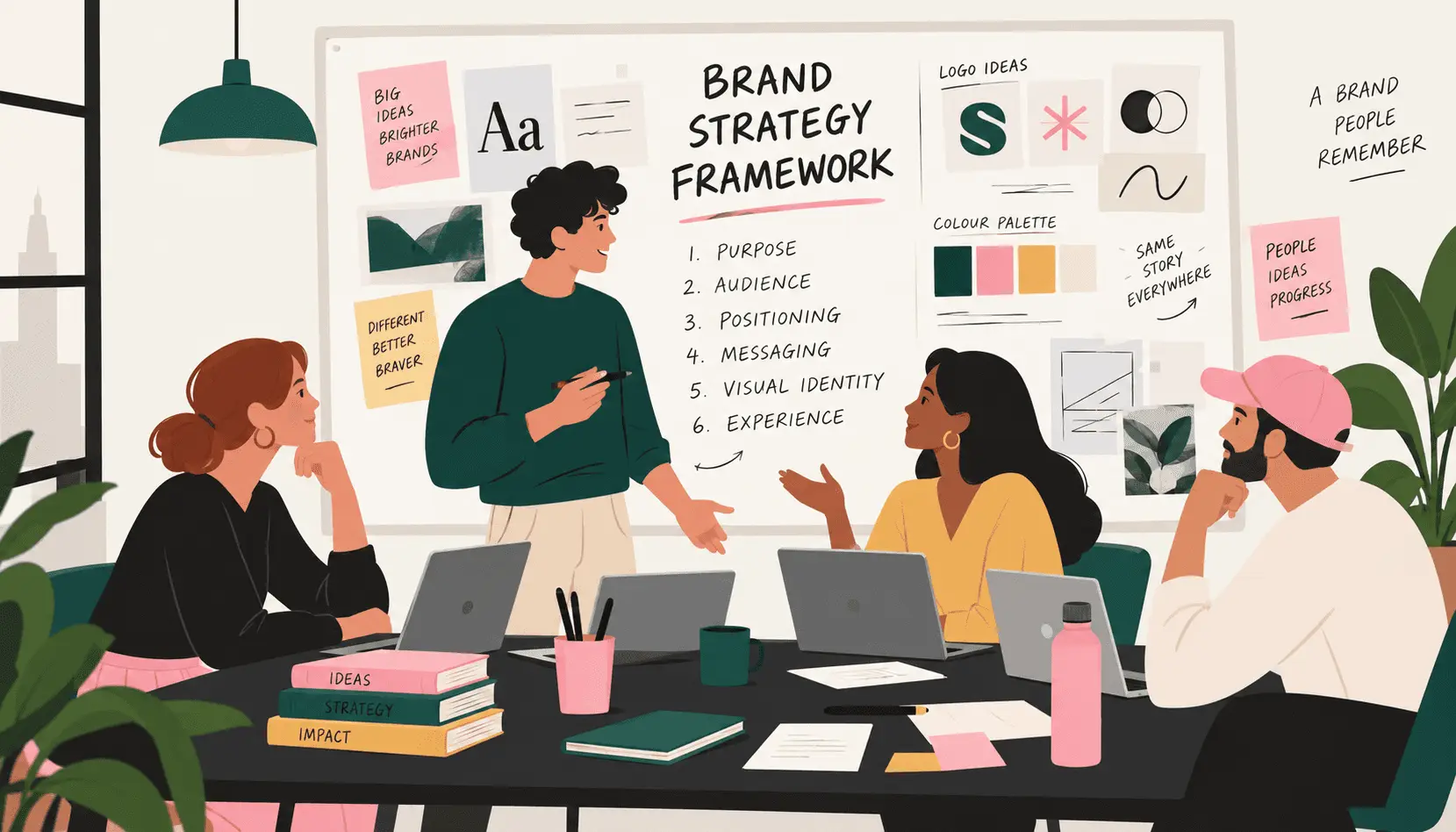
This thinking can feed into everything from commercial decisions to your wider brand strategy framework, helping ensure the decisions you make are grounded in a clearer understanding of your business, audience and market.
Let’s look at a real-world example...
Ambition, meet reality
Mergers and acquisitions (M&A) can offer significant opportunities for business growth, but even the boldest vision needs a well-researched strategy behind it. According to a 2021 Statista survey, unclear strategy and objectives were among the factors cited by respondents when looking at why M&A deals fail.
Not long ago, a client came to Studio East with big plans to supercharge their growth via M&A. They had their sights set on rapid expansion but wanted help developing a strategy that considered the risks, opportunities and practicalities involved.
We partnered with them to refine their approach, putting sustainable growth and long-term success at centre stage.
We supported them in carrying out detailed team skill assessments, researching potential targets and building a comprehensive multi-year integration plan, laying the groundwork for growth with purpose.
Stepping back to stick the landing

When it comes to M&A, moving quickly isn’t necessarily the same as moving strategically. Before pursuing an acquisition, businesses need a clear understanding of what they’re trying to achieve and whether the opportunity supports their wider direction.
For businesses looking to expand in this way, consider these questions before moving forward:
What are your ultimate objectives? Consider how M&A supports your long-term business vision. Is it the right route towards those goals?
Is your team prepared? Make sure you have the expertise and resources in place to manage the process from start to finish.
Is your research in place? How well do you understand the market landscape? Look closely at the potential risks, opportunities and cultural fit of your target businesses.
What’s your integration plan? The work doesn’t end when the deal is completed. Consider how teams, systems and operations will come together afterwards.
Are you thinking long term? The quickest move isn’t necessarily the right one. Your decision should be backed by research, a clear rationale and an understanding of what comes next.
By taking these considerations into account, you can build a strategy around more than the immediate opportunity.
Why insights are your best bet

IInsights are valuable for M&A, but the same principle applies to plenty of other business and marketing decisions.
Launching a new ad campaign? Releasing a new product? Repositioning your brand? Research can give you a stronger foundation for deciding what to do next.
Here’s why:
They turn data into direction: Raw data is everywhere, but numbers alone don’t tell you what to do. Insights can identify trends, uncover customer behaviours and put market changes into context.
They support more informed decisions: In high-stakes situations, uncertainty can make it difficult to know which direction to take. Research gives you evidence to assess your options rather than relying entirely on assumptions.
They provide perspective: When you’re heavily invested in a business decision, it can be difficult to challenge your own thinking. An outside perspective can help uncover assumptions and potential blind spots.
The same applies to marketing. Data-driven branding uses research and audience insight to inform decisions about how a brand positions itself and connects with the people it wants to reach.
Remember: Strategy beats speed

In a world that worships hustle, fast action is often praised. But speed without direction can quickly become wasted effort.
Research won’t make every business decision obvious or remove uncertainty altogether. What it can do is give you a clearer picture of the market, your audience and the options in front of you.
That matters whether you’re planning a product launch, developing a new campaign, entering a different market or considering an acquisition. Your marketing and performance strategy should be shaped by what the evidence tells you, rather than what you assume will work.
Insights give instinct something to work with. They can help you challenge assumptions, identify opportunities and make decisions with a better understanding of what’s happening around you.
If you need a fresh perspective on your next move, get in touch with Studio East.
Frequently Asked Questions
What are research and insights?
What’s the difference between data and insights?
Why are insights important in business strategy?
How can market research improve decision-making?
When should a business use third-party research?