How to Build a Multi-Platform Paid Social Strategy That Drives Growth
Running campaigns in isolation is holding your brand back. Here's how to fix it.
Published
Scroll Down ↓
Many brands invest heavily in paid social advertising, yet far fewer approach it through a clearly defined strategy.
The typical pattern involves running a Meta campaign one quarter or boosting a few LinkedIn posts along the way, with each platform treated in isolation and creative repurposed rather than designed for its context.
When results disappoint, the response often focuses on adjusting targeting or increasing spend rather than reconsidering the approach itself. That can lead to inconsistent performance and budget that fails to deliver the return it should.
A more effective route is to step back and rethink how paid social activity is structured in the first place. That means shaping it around your goals, audience and the way people move through the customer journey so each platform contributes to commercial growth.
Here’s what that looks like and how to build it.
What Is a Paid Social Media Strategy?
A paid social media strategy is the framework behind your campaigns. It's the thinking that determines why those campaigns exist, who they're for, where they run, what they say and how you'll judge whether they're working.
In practical terms, the strategy brings together the core decisions that shape the programme:
Clear business objectives
Defined target audiences
Assigned platform roles
Creative approach
Funnel mapping
Budget allocation
Testing methodology
Measurement criteria
A paid social strategy keeps investment connected to commercial outcomes so activity is judged against the impact it creates for the business.
That wider connection matters too. Paid social works best when it supports the other channels influencing the customer journey rather than operating as a standalone activity. A joined-up Marketing & Performance strategy can connect paid social with PPC, SEO, CRO, content and analytics around the same commercial goals.
Why Single-Channel Paid Social Holds Brands Back
No single platform can handle every stage of the funnel perfectly and over-reliance on one channel naturally creates risk.
As audiences saturate, costs can rise and creative learning stays narrow, leaving your funnel coverage incomplete.
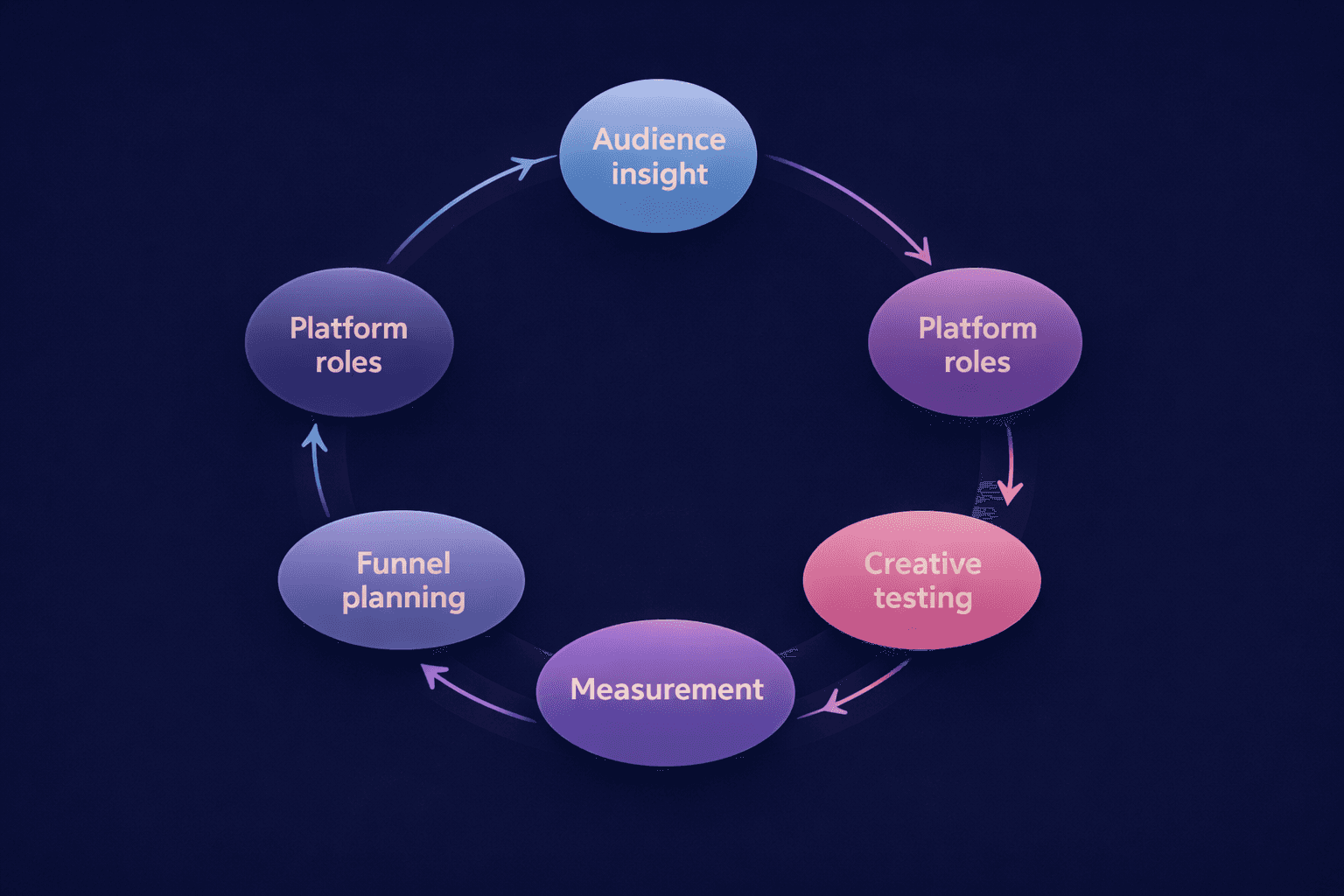
By diversifying your presence with a multi-platform paid social strategy, you can understand how different platforms contribute at different stages of the customer journey rather than relying on one channel to do everything.
The goal isn't to be everywhere at once. It's to choose platforms deliberately and give each one a clear purpose.
How to Build a Multi-Platform Paid Social Strategy
1. Set Clear Commercial Objectives
Strategy begins with a clear statement of what your brand needs to achieve.
Whether you’re aiming for revenue growth, lead generation or improved customer retention, the objective should shape platform prioritisation, funnel structure and the metrics you'll use to measure success.
Without that commercial goal, it's easy to optimise campaigns for activity rather than actual business impact.
2. Understand and Segment Your Audience
Effective social advertising relies on understanding who you’re reaching and their current mindset.
Segmentation needs to move beyond basic demographics to consider intent, pain points and where someone sits in the customer journey.
A cold audience encountering your brand for the first time needs a fundamentally different message from a warm visitor who has already explored your website or interacted with previous content.
This is where research matters. Using insights to make strategy smarter helps move audience decisions away from assumptions and towards a clearer understanding of what actually influences behaviour.
3. Give Each Platform a Clear Role
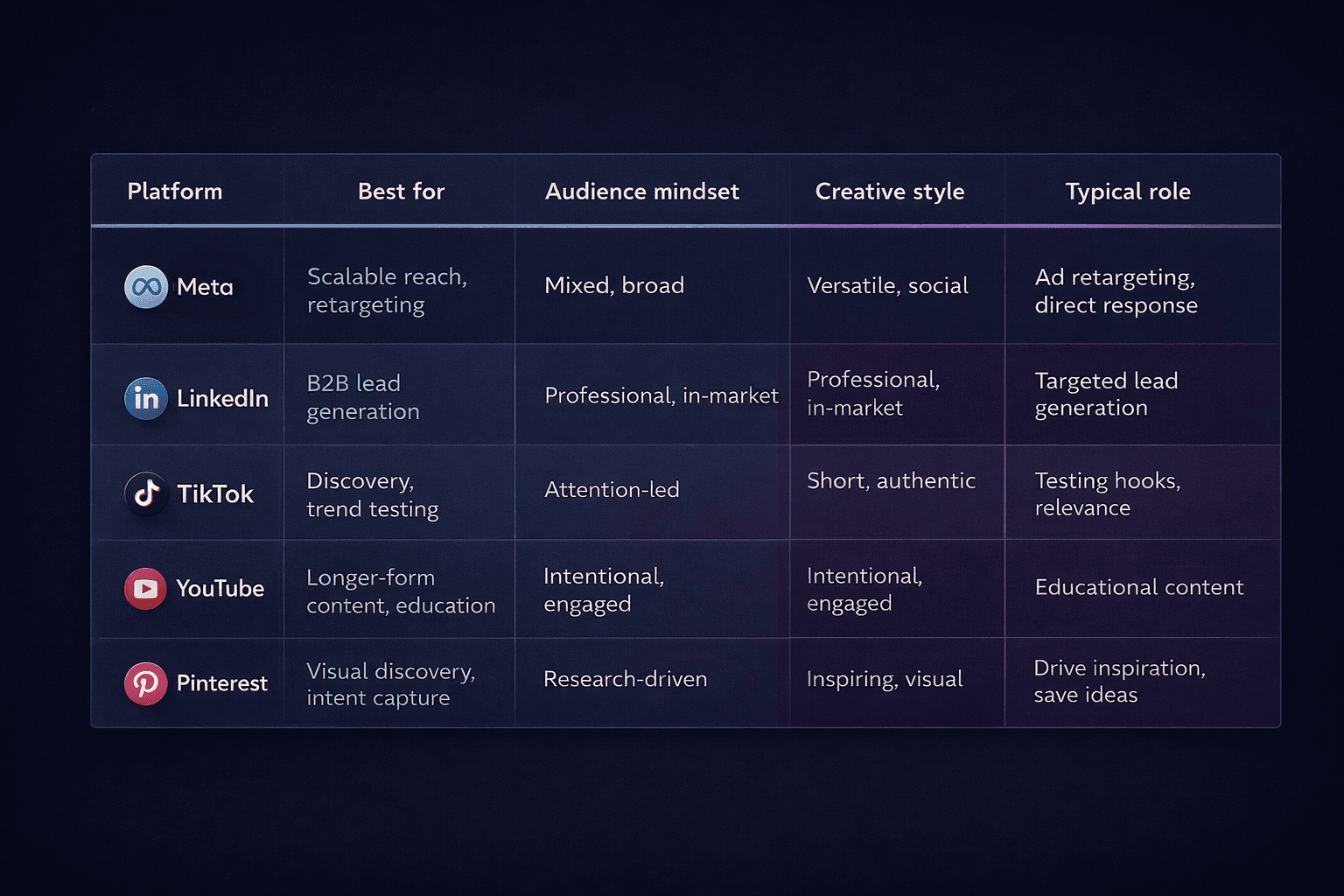
Different platforms have different strengths, audiences and behaviours. Your core commercial goal might remain consistent, but the execution shouldn't.
For example:
Meta can support large-scale reach, retargeting and direct response activity
LinkedIn offers precise B2B targeting for reaching professional audiences and decision-makers
TikTok provides an environment for discovery, creative testing and reaching new audiences
Pinterest and YouTube can support awareness, inspiration and research depending on your audience and product
Without a defined role, a platform can either drain budget it can't justify or end up being used at the wrong stage of the journey.
4. Map Activity Across the Funnel
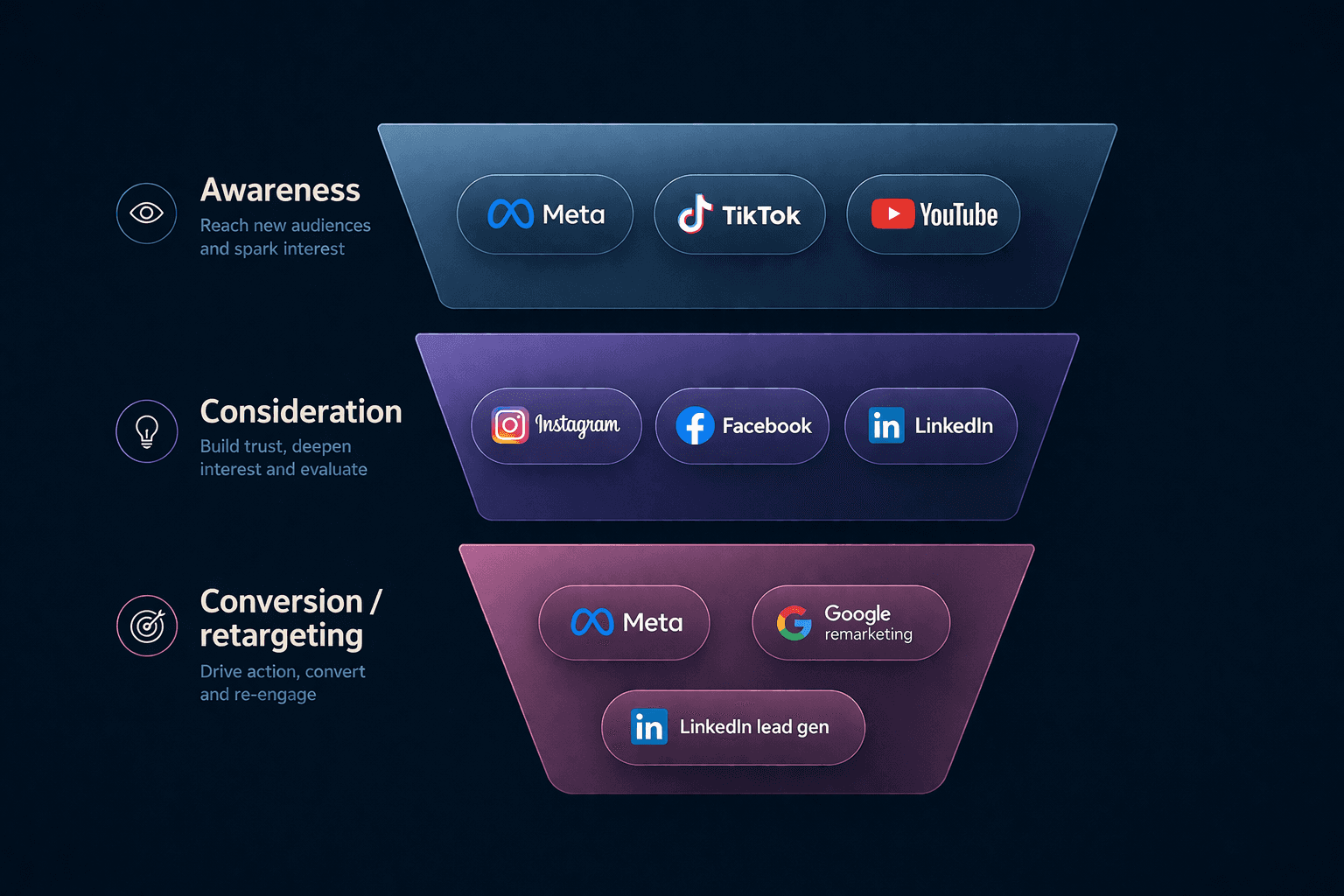
Paid social activity should connect the customer journey from initial awareness through consideration and conversion.
Each stage needs its own objective, message and measure of success.
Awareness activity can introduce new audiences to the brand. Mid-funnel campaigns can build consideration or bring previous visitors back. Conversion campaigns can then focus on people showing stronger purchase or enquiry intent.
When these stages are connected, paid social becomes a system rather than a collection of individual campaigns.
That joined-up approach can extend beyond paid social too. Our work with Katherine Hooker combined paid media with email, organic social and an improved ecommerce experience, connecting multiple touchpoints across the customer journey.
5. Allocate Budget Around Your Goals
A conversion-only budget ignores the audience development that makes those final sales possible.
Budget needs to reflect the role of each stage of the funnel, while leaving room for structured testing alongside proven campaigns.
Scaling before you've established what messages, audiences and creative approaches work can simply accelerate inefficiency.
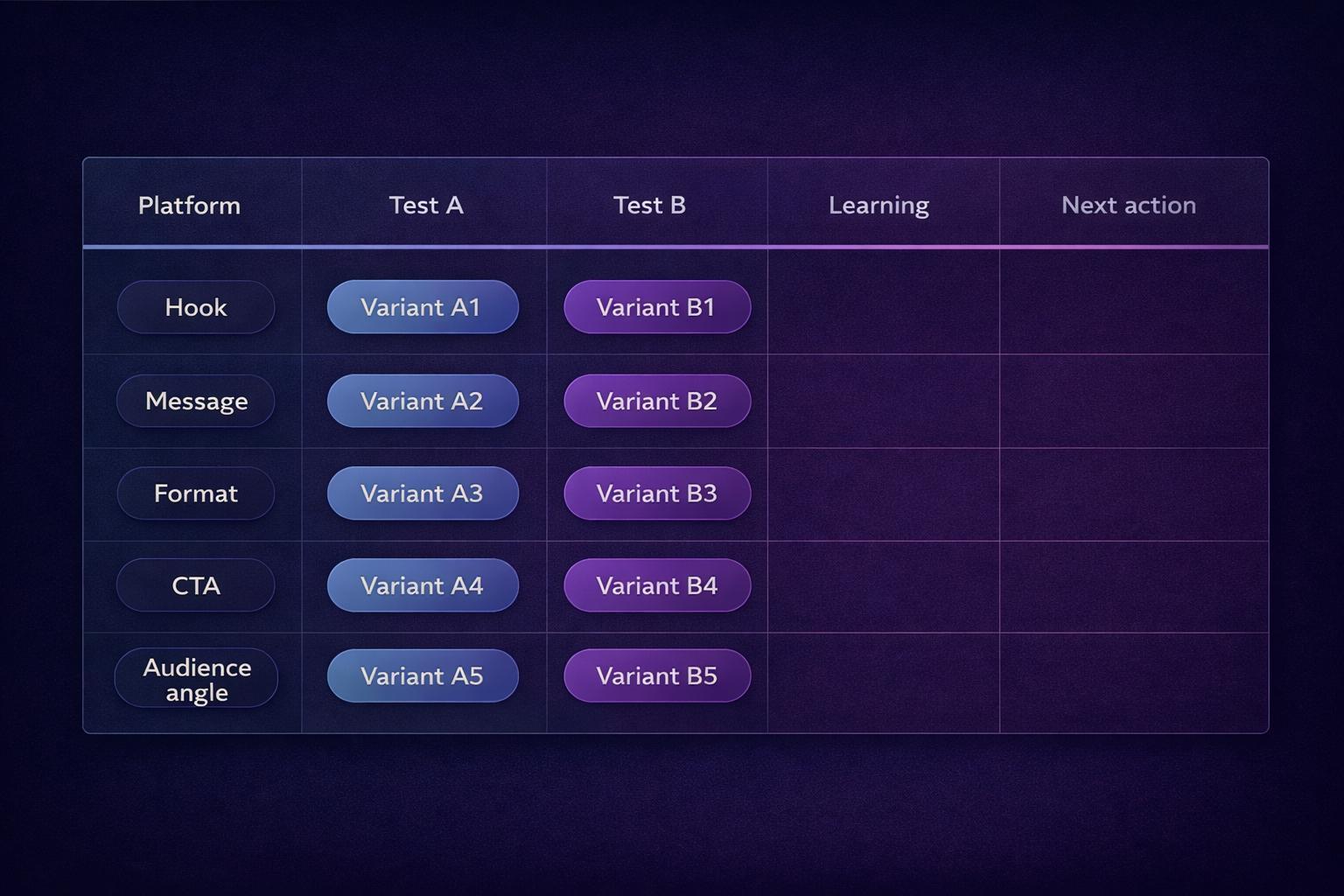
6. Build a Creative Testing Process
Creative is one of the biggest performance levers in paid social.
As platform algorithms have become more automated and AI-led, creative assets are doing more of the work when it comes to attracting attention and helping platforms understand who responds to an offer.
Different funnel stages also need different creative approaches:
Early stages: Build attention and emotional relevance
Middle stages: Communicate differentiation and value
Final stages: Use stronger calls to action, proof and reassurance
The strongest paid social programmes don't rely on one winning ad indefinitely. They maintain a pipeline of ideas, formats and messages that can be tested and improved.
Why Creative Is Central to Paid Social Performance
Your budget and platform settings influence who sees an ad, but the creative needs to turn that impression into attention and action.
If the execution fails to resonate with the user's intent or feels out of place on the platform, the media investment becomes less effective.
That's why simply resizing the same asset for Meta, LinkedIn and TikTok isn't a multi-platform creative strategy.
The underlying message can remain consistent, but the execution should reflect how people actually behave on each platform. Maintaining a consistent brand identity doesn't mean making every piece of content identical. It means keeping the brand recognisable while adapting how it communicates to different contexts.
Continuous iteration matters too. As audiences become familiar with creative, responsiveness can decline. Regular testing gives brands a way to identify new messages, formats and concepts before performance stagnates.
Choosing the Right Paid Social Platforms
Most brands don't need to advertise everywhere. The smarter approach is choosing the channels that fit your audience and giving each one a clear job.
Meta
Meta remains one of the most established paid social environments, supporting large-scale reach, retargeting and direct response activity.
Both ecommerce and lead generation campaigns can work effectively here, with many brands using Meta across multiple stages of the funnel.
Automation is also changing how advertisers approach the platform. As we explored when looking at Meta Andromeda and what it means for SMBs, creative quality and variety are becoming increasingly important as Meta's systems take on more of the targeting process.
LinkedIn is built around professional audience targeting, making it particularly useful for B2B lead generation.
Costs can be higher than on other social platforms, but access to specific industries, roles and decision-makers can make that investment worthwhile when the offer fits the audience.
TikTok
TikTok can support creative testing and introduce brands to new audiences through content-led discovery.
The platform rewards creative that feels native to the environment, making it particularly important to develop content specifically for TikTok rather than repurposing ads from elsewhere.
As social commerce continues to reshape online shopping, platforms such as TikTok are also shortening the journey between content discovery and purchase.
Pinterest and YouTube
These platforms can play more of an awareness, research or discovery role.
Pinterest suits visual discovery and considered purchases with longer research phases, while YouTube can support deeper product education and longer-form persuasion.
The relevance of either depends on your category, audience and wider funnel.
Common Paid Social Strategy Mistakes
Treating Every Platform the Same
Running the same ad, message and audience logic across every channel ignores the different ways people use each platform.
Keep the core brand and campaign idea consistent, but adapt the execution to the environment.
Chasing Vanity Metrics
Likes, impressions and low-cost clicks don't automatically translate into commercial impact.
These metrics can provide useful context, but a paid social strategy should ultimately be judged against the outcome it was designed to create.
Running Without a Creative Testing Process
Using the same assets for too long can cause performance to plateau.
A structured testing process allows brands to experiment with messages, hooks, formats and creative concepts, then apply those learnings to future campaigns.
Disconnecting Funnel Stages
Running awareness campaigns without a next step or conversion campaigns without building demand can leave gaps in the customer journey.
Audiences introduced to the brand at the top of the funnel should have a clear route towards consideration and conversion.
Scaling Too Early
Increasing spend before you've established what works simply scales the inefficiency alongside the campaign.
Test first, understand what is driving performance and then increase investment where the evidence supports it.
How to Measure Paid Social Performance
Start With the Right KPIs
Define success before the campaign launches.
Depending on the objective, useful commercial KPIs can include:
Cost per lead
Cost per acquisition
Conversion rate
Revenue
Return on ad spend
Lead quality
Assisted conversions
The right metric depends on what the campaign was designed to achieve.
Look Beyond Platform Metrics
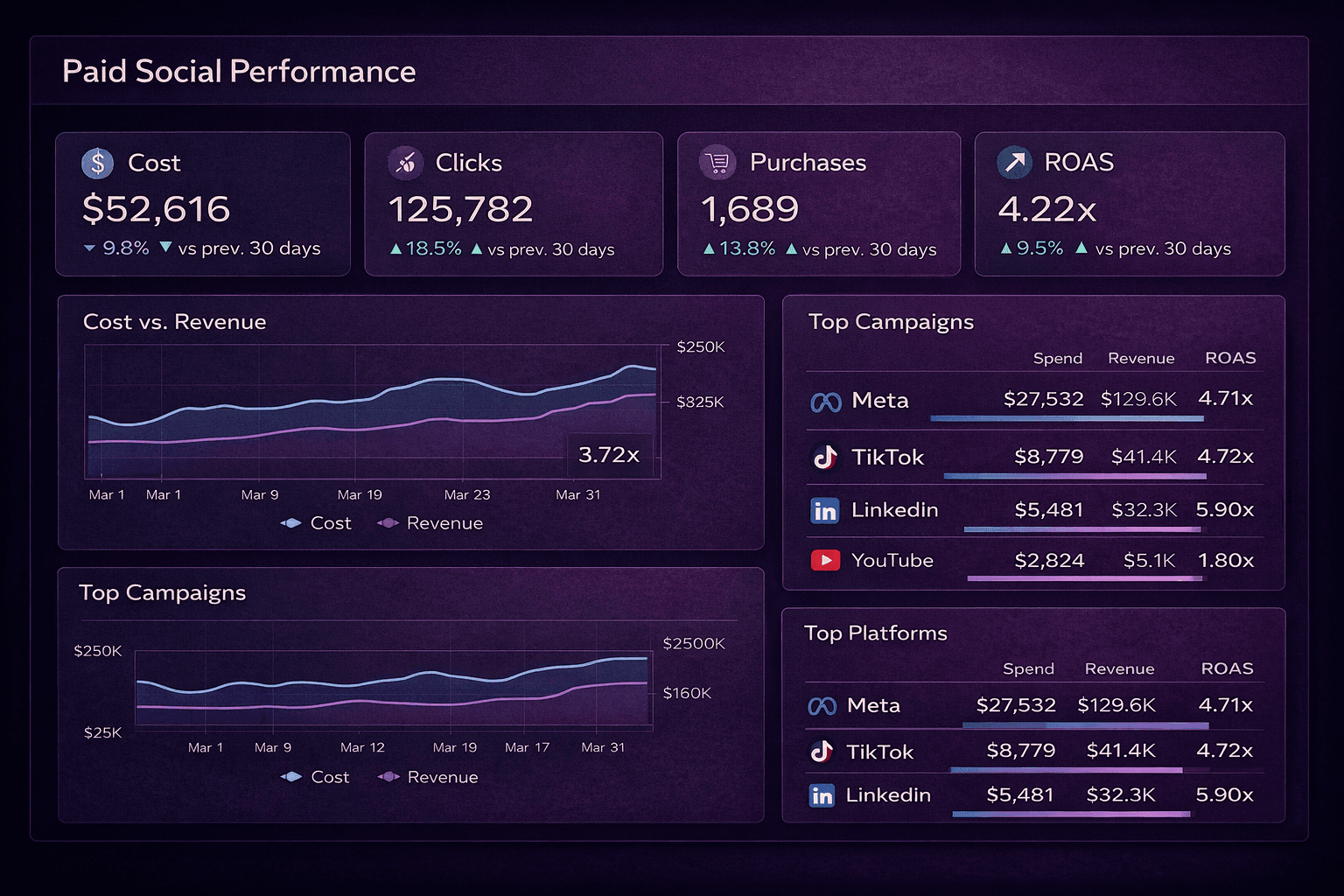
Platform dashboards are useful, but they only provide part of the picture.
Paid social performance should also be connected to landing page behaviour, analytics, CRM data and wider business outcomes. Stronger conversion signals give advertising platforms better information to optimise towards meaningful actions rather than surface-level engagement.
The principle applies across performance advertising. In our work with Solarboss, stronger conversion signals and a consolidated Google Ads structure helped drive a 126% increase in total orders and a 90% increase in conversion rate.
While the channels differ, the lesson is relevant: better data gives advertising systems a clearer understanding of the outcomes that matter to the business.
Watch Creative and Audience Signals
Falling click-through rates, rising acquisition costs, increasing frequency and declining conversion quality can all signal that something needs to change.
Catching those shifts early helps keep the programme efficient.
Evaluate Performance in Context
Success should be judged against the role each platform has been assigned.
Upper-funnel activity may influence results without directly closing a sale, while measuring every campaign solely against last-click conversion can undervalue awareness and distort budget decisions.
Performance data should help determine what happens next rather than simply reporting what has already happened.
Building a Smarter Paid Social Strategy
Building a more effective programme rarely means tearing everything down and starting again.
Start by reviewing how your current activity connects to commercial priorities and whether every platform, campaign and creative asset has a clear role.
Define the commercial goal. Be specific about what success looks like.
Set meaningful KPIs. Agree on the metrics that define success before launching.
Understand your audience. Map intent, pain points and stages of awareness.
Choose the right platform mix. Select channels based on your audience and objectives.
Assign platform roles. Give each channel a clear purpose within the funnel.
Develop a creative testing plan. Build a regular pipeline of ideas and formats to test.
Optimise based on evidence. Use performance data to decide what to change, stop or scale.
A strong paid social strategy connects these decisions rather than treating them as individual campaign settings.
When every platform contributes to a wider commercial objective, paid social becomes easier to evaluate, optimise and scale.
Looking to build a paid social strategy that supports sustainable growth? Talk to the Studio East team.
Frequently Asked Questions
A paid social media strategy defines your objectives, audiences, platforms, creative, budget and how campaign success will be measured.
Different platforms reach audiences in different contexts and can support different stages of the customer journey.
A paid social creative strategy defines how ad concepts, messages and formats will be developed, tested and adapted for different platforms.
Measure paid social against commercial KPIs such as cost per acquisition, ROAS, conversion rate, lead quality and revenue.
Choose platforms based on your audience and objectives. Meta, LinkedIn, TikTok, Pinterest and YouTube each support different audiences and stages of the funnel.
Many brands invest heavily in paid social advertising, yet far fewer approach it through a clearly defined strategy.
The typical pattern involves running a Meta campaign one quarter or boosting a few LinkedIn posts along the way, with each platform treated in isolation and creative repurposed rather than designed for its context.
When results disappoint, the response often focuses on adjusting targeting or increasing spend rather than reconsidering the approach itself. That can lead to inconsistent performance and budget that fails to deliver the return it should.
A more effective route is to step back and rethink how paid social activity is structured in the first place. That means shaping it around your goals, audience and the way people move through the customer journey so each platform contributes to commercial growth.
Here’s what that looks like and how to build it.
What Is a Paid Social Media Strategy?
A paid social media strategy is the framework behind your campaigns. It's the thinking that determines why those campaigns exist, who they're for, where they run, what they say and how you'll judge whether they're working.
In practical terms, the strategy brings together the core decisions that shape the programme:
Clear business objectives
Defined target audiences
Assigned platform roles
Creative approach
Funnel mapping
Budget allocation
Testing methodology
Measurement criteria
A paid social strategy keeps investment connected to commercial outcomes so activity is judged against the impact it creates for the business.
That wider connection matters too. Paid social works best when it supports the other channels influencing the customer journey rather than operating as a standalone activity. A joined-up Marketing & Performance strategy can connect paid social with PPC, SEO, CRO, content and analytics around the same commercial goals.
Why Single-Channel Paid Social Holds Brands Back
No single platform can handle every stage of the funnel perfectly and over-reliance on one channel naturally creates risk.
As audiences saturate, costs can rise and creative learning stays narrow, leaving your funnel coverage incomplete.
By diversifying your presence with a multi-platform paid social strategy, you can understand how different platforms contribute at different stages of the customer journey rather than relying on one channel to do everything.
The goal isn't to be everywhere at once. It's to choose platforms deliberately and give each one a clear purpose.
How to Build a Multi-Platform Paid Social Strategy
1. Set Clear Commercial Objectives
Strategy begins with a clear statement of what your brand needs to achieve.
Whether you’re aiming for revenue growth, lead generation or improved customer retention, the objective should shape platform prioritisation, funnel structure and the metrics you'll use to measure success.
Without that commercial goal, it's easy to optimise campaigns for activity rather than actual business impact.
2. Understand and Segment Your Audience
Effective social advertising relies on understanding who you’re reaching and their current mindset.
Segmentation needs to move beyond basic demographics to consider intent, pain points and where someone sits in the customer journey.
A cold audience encountering your brand for the first time needs a fundamentally different message from a warm visitor who has already explored your website or interacted with previous content.
This is where research matters. Using insights to make strategy smarter helps move audience decisions away from assumptions and towards a clearer understanding of what actually influences behaviour.
3. Give Each Platform a Clear Role
Different platforms have different strengths, audiences and behaviours. Your core commercial goal might remain consistent, but the execution shouldn't.
For example:
Meta can support large-scale reach, retargeting and direct response activity
LinkedIn offers precise B2B targeting for reaching professional audiences and decision-makers
TikTok provides an environment for discovery, creative testing and reaching new audiences
Pinterest and YouTube can support awareness, inspiration and research depending on your audience and product
Without a defined role, a platform can either drain budget it can't justify or end up being used at the wrong stage of the journey.
4. Map Activity Across the Funnel
Paid social activity should connect the customer journey from initial awareness through consideration and conversion.
Each stage needs its own objective, message and measure of success.
Awareness activity can introduce new audiences to the brand. Mid-funnel campaigns can build consideration or bring previous visitors back. Conversion campaigns can then focus on people showing stronger purchase or enquiry intent.
When these stages are connected, paid social becomes a system rather than a collection of individual campaigns.
That joined-up approach can extend beyond paid social too. Our work with Katherine Hooker combined paid media with email, organic social and an improved ecommerce experience, connecting multiple touchpoints across the customer journey.
5. Allocate Budget Around Your Goals
A conversion-only budget ignores the audience development that makes those final sales possible.
Budget needs to reflect the role of each stage of the funnel, while leaving room for structured testing alongside proven campaigns.
Scaling before you've established what messages, audiences and creative approaches work can simply accelerate inefficiency.
6. Build a Creative Testing Process
Creative is one of the biggest performance levers in paid social.
As platform algorithms have become more automated and AI-led, creative assets are doing more of the work when it comes to attracting attention and helping platforms understand who responds to an offer.
Different funnel stages also need different creative approaches:
Early stages: Build attention and emotional relevance
Middle stages: Communicate differentiation and value
Final stages: Use stronger calls to action, proof and reassurance
The strongest paid social programmes don't rely on one winning ad indefinitely. They maintain a pipeline of ideas, formats and messages that can be tested and improved.
Why Creative Is Central to Paid Social Performance
Your budget and platform settings influence who sees an ad, but the creative needs to turn that impression into attention and action.
If the execution fails to resonate with the user's intent or feels out of place on the platform, the media investment becomes less effective.
That's why simply resizing the same asset for Meta, LinkedIn and TikTok isn't a multi-platform creative strategy.
The underlying message can remain consistent, but the execution should reflect how people actually behave on each platform. Maintaining a consistent brand identity doesn't mean making every piece of content identical. It means keeping the brand recognisable while adapting how it communicates to different contexts.
Continuous iteration matters too. As audiences become familiar with creative, responsiveness can decline. Regular testing gives brands a way to identify new messages, formats and concepts before performance stagnates.
Choosing the Right Paid Social Platforms
Most brands don't need to advertise everywhere. The smarter approach is choosing the channels that fit your audience and giving each one a clear job.
Meta
Meta remains one of the most established paid social environments, supporting large-scale reach, retargeting and direct response activity.
Both ecommerce and lead generation campaigns can work effectively here, with many brands using Meta across multiple stages of the funnel.
Automation is also changing how advertisers approach the platform. As we explored when looking at Meta Andromeda and what it means for SMBs, creative quality and variety are becoming increasingly important as Meta's systems take on more of the targeting process.
LinkedIn is built around professional audience targeting, making it particularly useful for B2B lead generation.
Costs can be higher than on other social platforms, but access to specific industries, roles and decision-makers can make that investment worthwhile when the offer fits the audience.
TikTok
TikTok can support creative testing and introduce brands to new audiences through content-led discovery.
The platform rewards creative that feels native to the environment, making it particularly important to develop content specifically for TikTok rather than repurposing ads from elsewhere.
As social commerce continues to reshape online shopping, platforms such as TikTok are also shortening the journey between content discovery and purchase.
Pinterest and YouTube
These platforms can play more of an awareness, research or discovery role.
Pinterest suits visual discovery and considered purchases with longer research phases, while YouTube can support deeper product education and longer-form persuasion.
The relevance of either depends on your category, audience and wider funnel.
Common Paid Social Strategy Mistakes
Treating Every Platform the Same
Running the same ad, message and audience logic across every channel ignores the different ways people use each platform.
Keep the core brand and campaign idea consistent, but adapt the execution to the environment.
Chasing Vanity Metrics
Likes, impressions and low-cost clicks don't automatically translate into commercial impact.
These metrics can provide useful context, but a paid social strategy should ultimately be judged against the outcome it was designed to create.
Running Without a Creative Testing Process
Using the same assets for too long can cause performance to plateau.
A structured testing process allows brands to experiment with messages, hooks, formats and creative concepts, then apply those learnings to future campaigns.
Disconnecting Funnel Stages
Running awareness campaigns without a next step or conversion campaigns without building demand can leave gaps in the customer journey.
Audiences introduced to the brand at the top of the funnel should have a clear route towards consideration and conversion.
Scaling Too Early
Increasing spend before you've established what works simply scales the inefficiency alongside the campaign.
Test first, understand what is driving performance and then increase investment where the evidence supports it.
How to Measure Paid Social Performance
Start With the Right KPIs
Define success before the campaign launches.
Depending on the objective, useful commercial KPIs can include:
Cost per lead
Cost per acquisition
Conversion rate
Revenue
Return on ad spend
Lead quality
Assisted conversions
The right metric depends on what the campaign was designed to achieve.
Look Beyond Platform Metrics
Platform dashboards are useful, but they only provide part of the picture.
Paid social performance should also be connected to landing page behaviour, analytics, CRM data and wider business outcomes. Stronger conversion signals give advertising platforms better information to optimise towards meaningful actions rather than surface-level engagement.
The principle applies across performance advertising. In our work with Solarboss, stronger conversion signals and a consolidated Google Ads structure helped drive a 126% increase in total orders and a 90% increase in conversion rate.
While the channels differ, the lesson is relevant: better data gives advertising systems a clearer understanding of the outcomes that matter to the business.
Watch Creative and Audience Signals
Falling click-through rates, rising acquisition costs, increasing frequency and declining conversion quality can all signal that something needs to change.
Catching those shifts early helps keep the programme efficient.
Evaluate Performance in Context
Success should be judged against the role each platform has been assigned.
Upper-funnel activity may influence results without directly closing a sale, while measuring every campaign solely against last-click conversion can undervalue awareness and distort budget decisions.
Performance data should help determine what happens next rather than simply reporting what has already happened.
Building a Smarter Paid Social Strategy
Building a more effective programme rarely means tearing everything down and starting again.
Start by reviewing how your current activity connects to commercial priorities and whether every platform, campaign and creative asset has a clear role.
Define the commercial goal. Be specific about what success looks like.
Set meaningful KPIs. Agree on the metrics that define success before launching.
Understand your audience. Map intent, pain points and stages of awareness.
Choose the right platform mix. Select channels based on your audience and objectives.
Assign platform roles. Give each channel a clear purpose within the funnel.
Develop a creative testing plan. Build a regular pipeline of ideas and formats to test.
Optimise based on evidence. Use performance data to decide what to change, stop or scale.
A strong paid social strategy connects these decisions rather than treating them as individual campaign settings.
When every platform contributes to a wider commercial objective, paid social becomes easier to evaluate, optimise and scale.
Looking to build a paid social strategy that supports sustainable growth? Talk to the Studio East team.
Frequently Asked Questions
A paid social media strategy defines your objectives, audiences, platforms, creative, budget and how campaign success will be measured.
Different platforms reach audiences in different contexts and can support different stages of the customer journey.
A paid social creative strategy defines how ad concepts, messages and formats will be developed, tested and adapted for different platforms.
Measure paid social against commercial KPIs such as cost per acquisition, ROAS, conversion rate, lead quality and revenue.
Choose platforms based on your audience and objectives. Meta, LinkedIn, TikTok, Pinterest and YouTube each support different audiences and stages of the funnel.