Web Design & SEO: Why You Can’t Win Without Both
Web design can be an exciting investment. A refreshed brand, cleaner layouts, improved colour palettes and subtle animations can all make a website look and feel sharper.
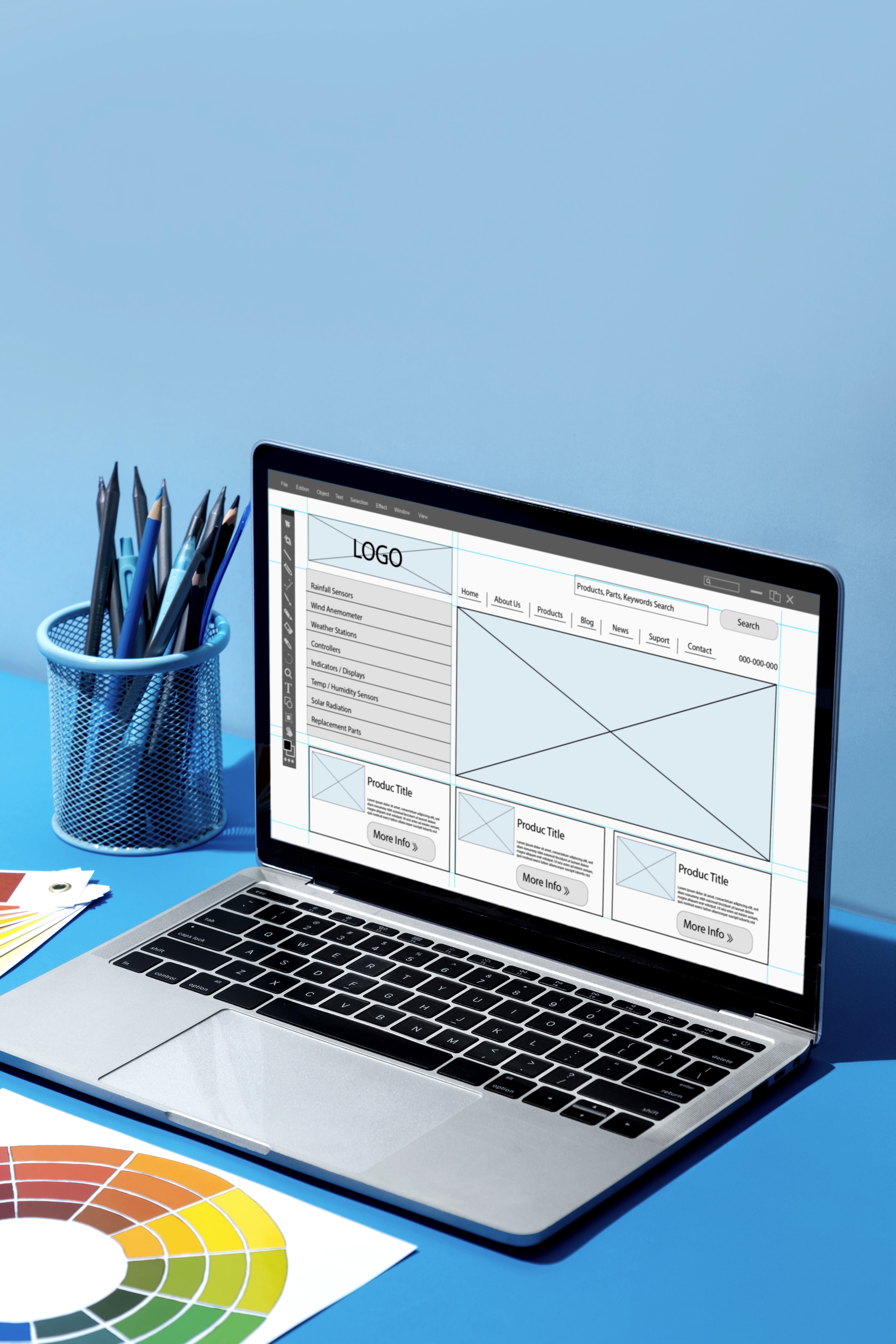
But when design decisions focus on appearance alone, that investment can lose impact quickly. A site can look polished and still struggle to attract the right audience or convert interest into action. If people can’t find your website or use it easily once they arrive, strong visuals won’t deliver meaningful results.
This is where web design and SEO intersect. One shapes how your site looks and functions. The other determines whether it’s discovered at all. But even the basics of SEO can be tricky to get right and when it’s treated separately from design, performance suffers in ways that go beyond traffic, affecting how well a site turns visits into leads or sales.
How web design and SEO work together
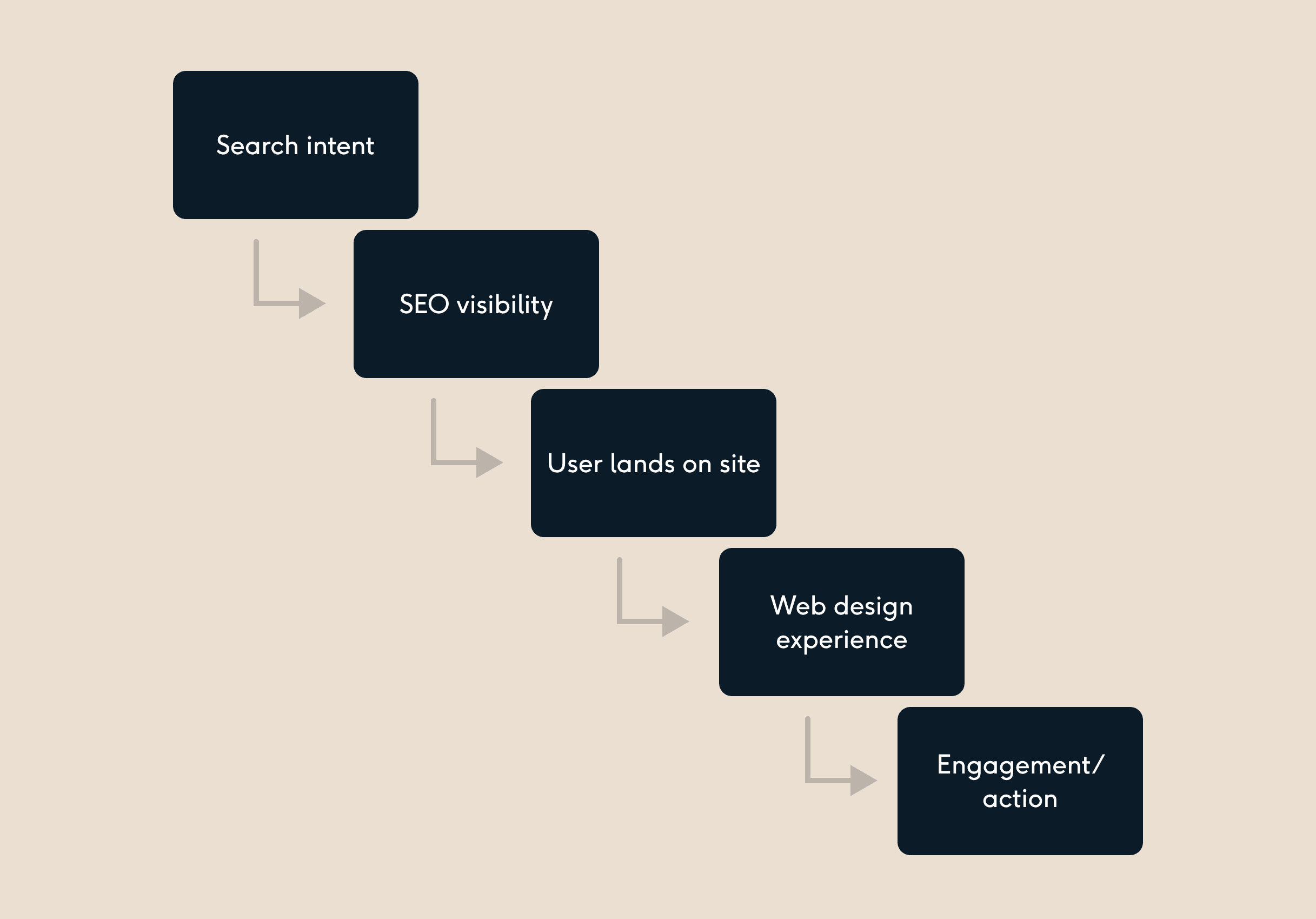
SEO helps people find your website when they’re actively searching, while web design shapes how they experience it once they arrive. Together, they ensure your site is both discoverable and easy to use, which builds trust and encourages engagement.
When web design and SEO are aligned early on, integration tends to show up in practical decisions such as:
Research shapes site structure, using search insight to understand what users are looking for and which content matters most
Pages are organised for clarity, with clear labels and groupings that make navigation easy for users and search engines
Layouts reflect priority, so important information appears first and supporting detail sits where people expect it
SEO insight guides page focus, reducing overlap and ensuring each page has a clear purpose
Strong web design brings structure to life by translating intent and hierarchy into a usable experience. When that experience breaks down, users leave before content or visibility has a chance to do its job. According to Hostinger, poor design can drive 38% of users away.
SEO ensures the right audience finds your site in the first place. But without usability, visibility alone won’t convert, and design without search visibility won’t scale.
Why Google cares about web design
Search engines like Google prioritise helpful results, not just the most keyword-heavy pages. It’s no longer enough for a website to match a search query. What happens after a user clicks now matters just as much.
In the past, some sites relied on tactics like keyword stuffing to gain visibility, often at the expense of user experience. Today, those approaches are penalised. Search engines increasingly favour websites that feel easy to use and genuinely helpful to the people landing on them.
This shift has made web design and user experience central to search performance. How quickly a page loads, how clearly content is presented and how easily users can move through a site all affect how people interact with it. As search continues to evolve, including the rise of generative search results, websites that prioritise clarity and usability are far more likely to rank and turn attention into action.
The web design mistakes that hurt SEO
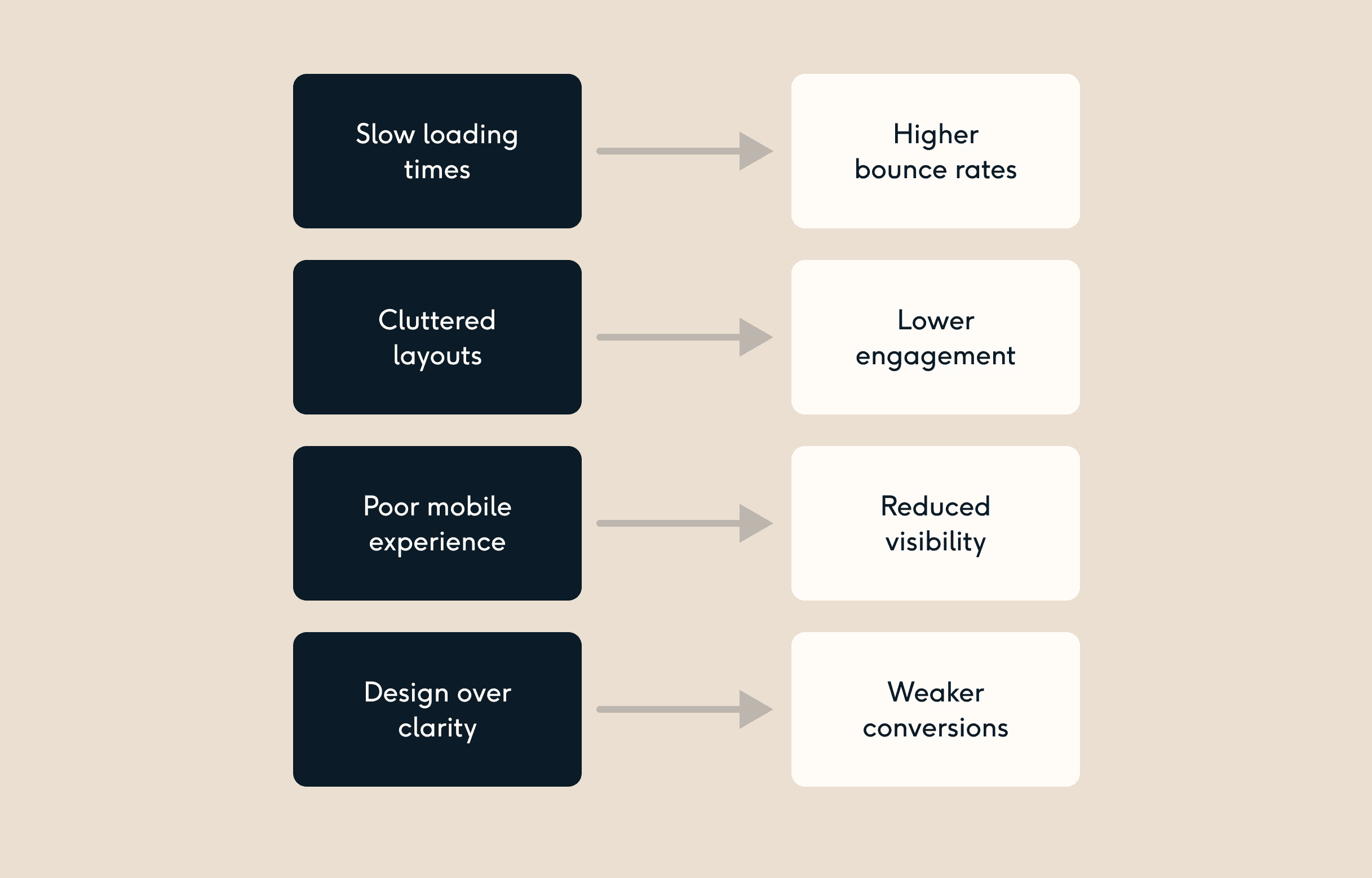
Many SEO problems don’t come from the content itself, but from how a website is designed and built. Even well-written pages can struggle to perform when usability issues get in the way. Pages that underperform often suffer from:
Slow-loading pages that frustrate users and increase bounce rates before content is even seen.
Cluttered layouts that make it hard for visitors to understand what the page is about or where to go next.
Confusing navigation that forces users to think too hard, leading them to leave rather than explore.
Poor mobile experience, especially on sites that aren’t built with responsive website design services in mind, limiting performance as more searches happen on smaller screens.
Design-led decisions that prioritise aesthetics over clarity, resulting in pages that look polished but don’t guide users or support search performance.
When these issues stack up, engagement drops. And when engagement drops, search visibility usually follows.
Designing websites that perform
Designing websites starts with intent. Strong visuals still matter, but the best web page design focuses on guiding users smoothly from arrival to action without friction. A clear structure, hierarchy and readable content help users understand what you offer and find what they need more easily. In web design, usability should lead the experience, with aesthetics supporting it.
That focus on usability naturally raises the question of balance. Brand expression and clarity need to work together. Prioritising visuals over structure or search intent can make a site look distinctive while limiting performance. Adding SEO after launch is rarely straightforward. Revisiting structure or navigation later often adds cost and forces compromise, which is why early alignment protects both performance and brand.
Design also needs to reflect how people use websites today. According to Statista, 62.54% of global website traffic now comes from mobile devices, making mobile-first thinking essential. With more users browsing on smaller screens, logical navigation and fast-loading pages are no longer optional. They’re expected. This matters even more in ecommerce web design, where design decisions directly affect how easily users move from browsing to buying.
When web design is built around SEO, it supports both users and search performance. The result is that your website not only looks good but also works harder to deliver the best outcomes.
The takeaway: performance beats polish
Web design and SEO work best when they’re treated as part of the same system. A site that looks good but can’t be found will struggle to deliver value, just as strong visibility without a usable experience limits long-term performance. That’s why web design and SEO marketing need to be considered together from the start, not handled as separate projects.
When design decisions are guided by user behaviour, search intent and clarity, websites become more than a visual asset. They support growth by attracting the right audiences and making it easier for them to take action.
At Studio East, we design and build websites with performance in mind, aligning web design and SEO marketing to support real business growth. If you want your website to work harder, talk to us today.