Why Great B2B Storytelling Matters
B2B marketing is often written off as the sensible, spreadsheet-loving cousin of the flashier B2C world. But that’s selling it short.
In a world flooded with sales pitches and jargon-filled PDFs, a relatable narrative can make the difference between becoming a trusted partner or getting lost in the inbox abyss.
Great storytelling, the kind that makes people lean in, works just as well in the B2B space. Why? Because despite all the talk of “decision-makers” and “stakeholders,” B2B marketing is still all about people. And people love a good story.
When done right, B2B storytelling isn’t just about what you sell. It’s about creating a connection, communicating what makes your business different and showing the people behind the purchasing decision why your solution fits their story.
B2B’s emotional landscape
There seems to be a long-standing assumption that B2B customers or “buyers” are super-logical, facts-first creatures. Sure, data, KPIs, budgets and business cases matter, but purchasing decisions aren’t made in a vacuum.
The people evaluating your business also need to understand what you offer, trust that you can deliver and see why choosing you makes sense for them.
That doesn’t mean abandoning the data. In fact, using insights to make smarter strategic decisions can give you a much better understanding of what matters to your audience. Storytelling gives you a way to turn that information into something people actually want to engage with.
Take Slack, for instance. When they broke onto the scene, they didn’t bombard you with features or bore you with endless tech specs. Instead, they rolled out their “So Yeah, We Tried Slack…” campaign, a cheeky, offbeat mini-documentary showing an office team struggling to communicate and how Slack swoops in to help.
It’s not just about the tool, it’s about the everyday experience of how it simplifies work life.
Suddenly, using Slack isn’t just about another piece of workplace software. The story gives the audience a situation they recognise and shows where the product fits within it. And that’s the magic of good storytelling.
Make your customer the hero
Every good story has a hero, and when it comes to B2B marketing, that hero isn’t you. It’s your customer.
Your product or service? That’s the trusty sidekick. The one that appears just in time to help the hero solve a gnarly problem. And believe us, that distinction is crucial.
HubSpot is a master of this approach. Their customer success stories, like ClassPass, focus on real businesses that have used it to overcome their challenges. Whether it’s scaling operations or streamlining marketing campaigns, HubSpot makes the customer the star of the show, with their platform playing the supportive, reliable Robin to their Batman.
This narrative puts the focus on transformation, not technology, which can be far more compelling than a dry list of features.
It’s the same principle that makes a strong case study work. Rather than simply listing what was delivered, show the challenge, the thinking behind the solution and what changed as a result. Our work with True Adventure, for example, shows how a wider brand story can be shaped around the people a business needs to connect with.

Stories stick in a way stats don’t
Facts are useful, but facts without context can be difficult to connect with. A story gives those facts a structure, helping your audience understand why the information matters to them.
Take Mailchimp’s “Guess Less, Sell More” campaign. Rather than following a typical narrative structure with a clear brand journey, this campaign is intentionally abstract, using surreal and playful visuals to demonstrate how Mailchimp helps businesses make smarter, data-driven marketing decisions.
By standing out with its quirky and unexpected approach, the campaign cuts through the noise as a prime example of how a different type of storytelling can still communicate the value of a product.
And you don’t necessarily need a huge campaign to tell a good story. The words you choose across your website, case studies, emails and campaigns all contribute to the wider narrative. That’s where copywriting gives your brand a recognisable voice rather than leaving every piece of content to stand on its own.
The “what’s in it for me?” factor
The best stories in B2B marketing don’t just entertain, they answer a fundamental question: “What’s in it for me?”
A good narrative needs to resonate with your audience’s pain points and priorities, showing how your product or service solves a problem in a way that’s clear, concise and compelling.
For example, IBM’s “Outthink” campaign aimed to highlight how its technologies were transforming industries. Rather than relying entirely on complex technical language, the campaign focused on real-world challenges and what technology could help organisations achieve.
That’s particularly important in B2B marketing where products and services can be complicated. Your audience may need the technical details eventually, but your story should first give those details meaning.

Keep it real and relatable
Authenticity goes a long way in B2B storytelling. Nobody wants to hear about a business that’s impossibly perfect. What people do want to understand is how you think, how you approach challenges and what it might actually be like to work with you.
Sharing genuine experiences, customer stories and lessons learned can make your content more believable. It’s part of humanising your brand, particularly in industries where businesses can otherwise start to sound remarkably similar.
Zendesk’s “I Like It When He Gives Me the Business” campaign is a masterclass in using humour to draw a cheeky parallel between customer service and marriage. The campaign shines a spotlight on the importance of communication and understanding in both customer service and business relationships.
By framing their product in this way, Zendesk isn’t just pushing software. They’re tapping into relatable human experiences that can make the people behind purchasing decisions think, “Yep, I’ve been there.”
The bottom line? Tell your story strategically
The most successful brands understand that storytelling isn’t fluff, it’s a strategic tool. But a good story still needs direction.
Who are you speaking to? What do they care about? What makes your perspective different? And what do you want them to understand about your business when they reach the end?
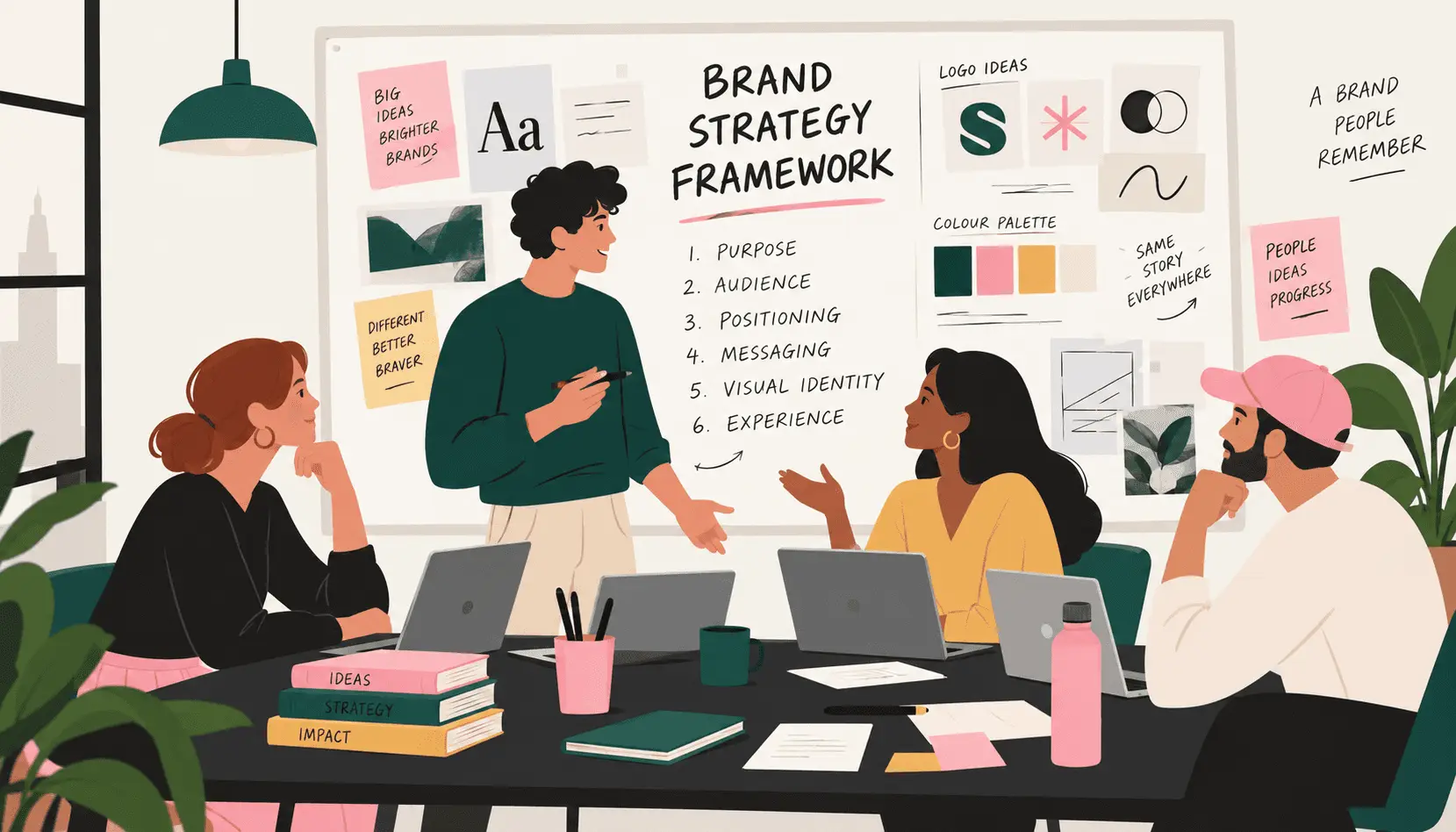
Those decisions should come from your wider brand strategy, so the stories you tell reinforce your positioning, messaging and personality rather than simply creating content for content’s sake.
Because in the world of B2B, stories can give people a reason to remember you. So get those creative juices flowing and start crafting narratives that resonate. Your audience is waiting to connect with something real.
Give your brand story somewhere to go
From defining your message to finding the words that bring it to life, a strong story starts with understanding what makes your business worth listening to. If you need help shaping yours, get in touch with Studio East.
Frequently Asked Questions
What is B2B storytelling?
Why is storytelling important in B2B marketing?
How can you use storytelling in B2B marketing?
What makes a good B2B brand story?
What are some examples of B2B storytelling?